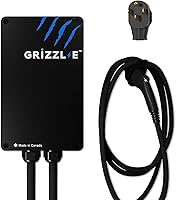
Grizzl-E Classic 40A EV Charger Review: Worth It? (October 2026)
The Grizzl-E Classic suits drivers who want simple, adjustable plug-in home charging. Choose the Classic Connect for Wi-Fi schedules and energy tracking, or consider the hardwired 48A model if your car and circuit can use more power.
On this page (10 sections)
- Who should buy the Grizzl-E Classic?
- How much charging power do you actually need?
- What should you check before installing the Classic?
- Will the cable reach your parking space?
- Is the Classic Connect worth choosing instead?
- When does the hardwired 48A option make sense?
- Who should choose the EVIQO plug-in alternative?
- How should you set up your charging routine?
- What care helps prevent avoidable charging problems?
- Which Grizzl-E Classic option should you buy?
The Grizzl-E Classic is a good choice for simple plug-in home charging, especially if you want adjustable current without building your routine around a charger app. Buy it when your outlet, parking layout and daily driving needs fit its design.
The main decision is whether you need connected controls or more charging power. The Classic Connect adds schedules and energy tracking, while the hardwired 48A option serves vehicles and homes that can use higher output.
Who should buy the Grizzl-E Classic?
Choose the Classic if you want a straightforward charging routine and can leave the charger mounted near your usual parking spot. It's especially useful when you need to match charging current to a suitable existing circuit.
Grizzl-E Classic 40A NEMA 14-50 Charger: Best for simple charging routines
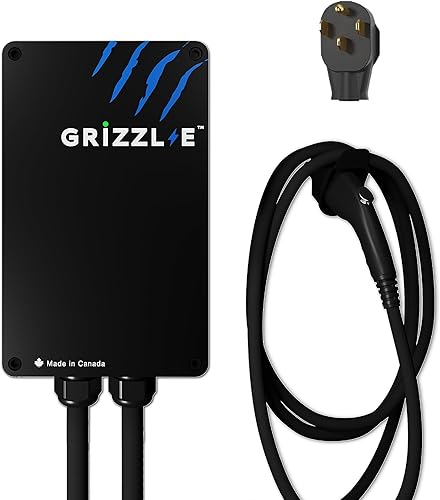
- 40A maximum output
- NEMA 14-50 plug
- 24 ft cable
- Adjustable 16A, 24A, 32A or 40A
Suits drivers who want straightforward home charging with a current setting matched to their circuit. Measure the cable route and confirm the outlet before choosing it.
Pros
- Four current settings for suitable circuits
- Metal enclosure for indoor or outdoor placement
- Grizzl-E identifies it as UL certified
- Built-in GFCI and electrical protections
Cons
- Requires a suitable NEMA 14-50 outlet and circuit
- Choose a connected alternative for charger-based schedules and energy tracking
Its metal enclosure and indoor or outdoor design make it worth considering for either a garage or an exposed parking area. Grizzl-E identifies it as UL certified and includes built-in GFCI, fault protections and power outage recovery.
Skip it if remote monitoring and charger-based schedules are central to your plan. The connected options below give you those controls without relying only on features your vehicle may provide.
Why the Grizzl-E Classic earns its score
The Classic's 9.1 score reflects its fit for simple home charging: adjustable current, a plug-in connection and electrical protections. ModestMeasure compared those features with the connected and hardwired alternatives below.
That score doesn't mean every buyer should choose it. A driver who needs energy reports has a different priority from someone who simply wants to plug in after work.
How much charging power do you actually need?
Choose enough output to replace your daily driving during the time you park, rather than choosing the largest number available. Your vehicle's AC charging limit also matters because a charger can't make the car accept more power than it supports.
The Classic has 16A, 24A, 32A and 40A settings. Grizzl-E pairs them with 20A, 30A, 40A and 50A circuit breakers, respectively.
These pairings don't confirm that an existing circuit is ready for use. The wiring, outlet and installation must also suit the selected current, as our guide to choosing an EV charger breaker size explains.
Grizzl-E estimates about 10–12 miles of range added per charging hour at the lowest setting and 28–30 at the highest. Treat those as planning estimates because vehicle efficiency and charging conditions change the result.
For a better comparison, find your vehicle's usable battery capacity and maximum AC charging rate. Think about the energy you need to replace on a normal day, not just the time required to refill an almost empty battery.
A long overnight parking window may make a lower current setting sufficient. Drivers who return late, leave early or make several trips each day have more reason to value faster replenishment.
What should you check before installing the Classic?
Confirm the circuit and outlet before ordering, especially if you plan to use an existing receptacle. This version needs a NEMA 14-50 connection supplying 240V.
A matching plug shape doesn't prove that the wiring is sound or that the circuit can carry a long charging session. Ask a qualified electrician to inspect the outlet, circuit capacity and any required protection.
Don't increase the breaker size simply to reach the charger's maximum output. The breaker must suit the wiring and the whole installation, not just the equipment you want to connect.
If you need new electrical work anyway, compare hardwired vs. plug-in EV chargers before choosing the connection. A plug-in model is most convenient when a suitable outlet is already in the right place.
Confirm your vehicle's connector requirements separately from the household plug. Our J1772 versus NACS guide explains the car-side connection and why some vehicles need an approved adapter.
For a broader plan covering equipment, parking and electrical work, see home EV chargers and what to buy.
Will the cable reach your parking space?
Measure the actual route to the charge port, including bends and enough slack to connect comfortably. The Classic's cable is 24 ft long, but the usable distance depends on mounting height and obstacles.
Park as you normally would before measuring. If you sometimes reverse into the space, check both positions rather than assuming the cable will reach from either direction.
Leave enough slack that the connector isn't pulled sideways while charging. Route the cable away from garage door tracks, sharp edges, walking paths and places where tires could cross it.
If the route is too long, move the installation point or reconsider the charger location. Don't solve a reach problem with an extension cord; our EV charger extension cord guide explains why.
Grizzl-E gives the enclosure an IP67 water-resistance rating and describes the Classic as suitable for normal and cold weather. Follow the mounting instructions and keep the connector stored properly, since an enclosure rating doesn't protect a poorly placed outlet or damaged cable.
Is the Classic Connect worth choosing instead?
Choose the Classic Connect when charger-based schedules and energy records will change how you charge. It's a better match for drivers who want to check sessions from their phone or keep track of charging energy.
Grizzl-E Classic Connect 40A Charger: Best for connected Grizzl-E households

- 40A maximum output
- NEMA 14-50 plug
- 25 ft cable
- Wi-Fi charging schedules and monitoring
Choose this Grizzl-E when you want charging schedules and energy statistics in addition to plug-in charging. Basic charging works with or without an online connection.
Pros
- Wi-Fi schedules and energy statistics
- Charging works without an online connection
- 25 ft cable and connector holster
- Grizzl-E backs it with a 3-year warranty
Cons
- Premium OCPP capability has a one-time activation fee
- Remote monitoring needs an online connection
Grizzl-E Connect provides real-time monitoring, schedules, energy statistics, updates and diagnostics. Charging works with or without an online connection, so a network outage doesn't by itself remove basic charging capability.
Before choosing it for off-peak charging, check your electricity plan and your vehicle's built-in schedule controls. If the car already handles your preferred charging window, decide whether separate energy records and remote access add enough value.
The Connect includes a 25 ft cable and an EasyEvPlug holster. That extra foot over the Classic may help a tight layout, but it won't solve a mounting point that's several feet too far away.
Grizzl-E backs it with a 3-year warranty, while premium OCPP capability carries a one-time activation fee. OCPP matters mainly if you need that specific charging-system integration; don't choose the charger for it without confirming your requirements.
Skip the Connect if you won't use its connected features. It has the same maximum output as the Classic, so app access alone doesn't make charging faster.
When does the hardwired 48A option make sense?
Choose the hardwired Grizzl-E when a shorter charging window makes higher output useful and your car can accept it. It provides up to 48A, or 11.5 kW, through a permanent electrical connection.
Grizzl-E Ultimate 48A Hardwired Charger: Best for higher-demand home charging

- 48A maximum output
- Hardwired connection
- 25 ft J1772 cable
- Wi-Fi monitoring and schedules
Suits a permanent installation where the vehicle and electrical system can use higher output. Includes connected controls and power distribution features for multiple chargers.
Pros
- Up to 48A output
- Includes mounting bracket and hardwire kit
- Wi-Fi schedules and monitoring
- Grizzl-E backs it with a 3-year warranty
Cons
- Requires a hardwired installation
- Premium OCPP capability has a one-time activation fee
The increase from 40A to 48A is 20% in available current. It won't produce the same gain in every charging session because the vehicle's limit, battery state and other conditions still affect charging.
This model includes a 25 ft J1772 cable, mounting bracket and hardwire kit. Grizzl-E identifies it as UL and Energy Star certified and backs it with a 3-year warranty.
Its connected features include schedules, monitoring and energy statistics. It also offers power distribution across multiple chargers, with equal sharing or priority charging options.
If you're planning for 2 vehicles, ask how those features would fit the proposed electrical design. Sharing power between chargers doesn't create extra capacity in your home's service.
Skip this option if you want to keep using a suitable outlet or your vehicle can't benefit from the extra output. Read our guide to EV charger installation costs and get an electrician's assessment before committing to a permanent installation.
Who should choose the EVIQO plug-in alternative?
Choose EVIQO if you want phone controls and practical daily-use features in a plug-in charger. It's worth comparing with the Classic Connect when app functions matter more than staying with Grizzl-E.
EVIQO 40A NEMA 14-50 J1772 Charger: Best for app-focused plug-in charging

- 40A maximum output
- NEMA 14-50 plug
- 25 ft cable
- App controls and charging schedules
A plug-in alternative for drivers who want phone controls, charging reminders and energy tracking. Check for a suitable circuit and 2.4 GHz Wi-Fi where it will be mounted.
Pros
- App controls, schedules and reminders
- Glow-in-the-dark connector holster
- EVIQO identifies it as UL and ETL certified
- EVIQO backs it with a 3-year manufacturer warranty
Cons
- Requires a NEMA 14-50 outlet on a dedicated 50A circuit
- App connection requires 2.4 GHz Wi-Fi
Its app supports start and stop controls, schedules, reminders, energy tracking and current adjustment from 6A to 40A. EVIQO requires 2.4 GHz Wi-Fi for the app connection, so check coverage at the mounting location.
EVIQO specifies a dedicated 50A circuit and includes a 25 ft J1772 cable. Lowering the current through the app doesn't remove that stated installation requirement.
The glow-in-the-dark holster helps you find the storage point at night. A side reset button also lets you restart the charger without opening the enclosure.
EVIQO identifies it as UL and ETL certified and backs it with a 3-year manufacturer warranty. Its sealed IP66/NEMA 4 housing supports indoor or outdoor placement.
Skip it if you only need a simple charging routine and won't use the app. Also confirm connector compatibility rather than assuming every vehicle can connect directly.
How should you set up your charging routine?
Start with one clear schedule and an approved current setting. Configure the charger according to its instructions after the electrician has confirmed what the circuit can support.
If you're using a connected model, avoid setting conflicting charging windows in both the car and charger. A session can fail to start because one schedule allows charging while the other blocks it.
For off-peak charging, check when the lower rate begins and ends. Allow enough time for your usual energy needs, and remember that weekend or seasonal rate periods may differ.
Use the vehicle's recommended charge limit for everyday driving. You don't need to refill to the maximum after every short trip just because the car is plugged in.
After setup, confirm that charging starts, that the expected schedule runs and that the cable can rest without strain. These checks help catch a parking or settings problem before you depend on an overnight session.
What care helps prevent avoidable charging problems?
Keep the cable, connector and outlet area clean and undamaged. Before connecting, look for cracked insulation, bent contacts, debris or signs of heat damage.
Store the cable in broad loops and keep the connector off the ground. Don't pinch the cable under a garage door or pull on it to remove the connector.
For cleaning, follow the manufacturer's instructions and avoid directing water into electrical connections. Water-resistant equipment still needs proper handling.
Stop using the charger if you notice burning smells, discoloration, melted areas or repeated faults. Have the cause checked rather than repeatedly resetting the equipment or raising the current.
A plug-in connection also deserves attention over time. If the plug becomes loose or the outlet shows damage, stop charging and have an electrician inspect it.
Which Grizzl-E Classic option should you buy?
Choose the Grizzl-E Classic for a simple daily routine, then move to an alternative only when it solves a clear need. The best fit depends on your circuit, vehicle and charging window.
- Pick the Classic if your outlet and cable route work and you don't need charger-based connected controls.
- Pick the Classic Connect if you want Grizzl-E schedules, monitoring and energy statistics.
- Pick the hardwired 48A Grizzl-E if your vehicle can use the added output and a permanent installation suits your home.
- Pick EVIQO if app controls, reminders and its connector storage features fit your routine.
For another connected-charger comparison, read Grizzl-E versus ChargePoint Home Flex. The ChargePoint Home Flex review provides a closer look at that alternative.
Before ordering, settle 3 things: who will confirm the circuit, where the cable will run and how much energy you need overnight. If the Classic doesn't fit those answers, compare our best plug-in Level 2 EV chargers before arranging electrical work.
Frequently asked questions
Is the Grizzl-E Classic a good home EV charger?
The Grizzl-E Classic is a good choice for drivers who want simple plug-in charging with adjustable current; its value depends on having a suitable outlet, enough cable reach and an output setting that meets your daily needs. Choose a connected model if charger-based schedules and energy tracking matter.
Does the Grizzl-E Classic have Wi-Fi?
Choose the Classic Connect for Wi-Fi schedules, monitoring and energy statistics; the standard Classic is the simpler choice for a routine that doesn't depend on charger-based connected controls. Before paying for those controls, check whether your vehicle already offers the charging schedule you need.
What outlet does the Grizzl-E Classic use?
This Classic version uses a NEMA 14-50 outlet; a matching socket alone doesn't confirm that the installation can support charging at your chosen current. Have a qualified electrician check the wiring, outlet condition and circuit, then configure the charger according to its instructions and the approved circuit capacity.
Can the Grizzl-E Classic be used outdoors?
Yes, Grizzl-E describes the Classic as suitable for indoor and outdoor use and gives its enclosure an IP67 water-resistance rating. Outdoor installation still needs suitable outlet protection, mounting and cable routing; keep the connector stored as instructed, and don't treat water resistance as permission to charge with damaged equipment.