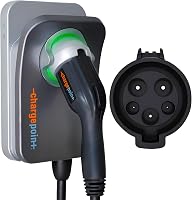
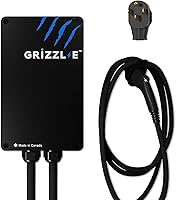
7 Best Plug-In EV Chargers for a NEMA 14-50 Outlet (October 2026)
The best plug-in Level 2 EV chargers for NEMA 14-50 outlets include the Grizzl-E Classic 40A NEMA 14-50 Charger for simple home charging, the ChargePoint HomeFlex NEMA 14-50 Charger for connected households, and the EVIQO 40A NEMA 14-50 J1772 Charger for off-peak charging.
On this page (16 sections)
- Which is the best plug-in Level 2 EV charger for your home?
- How do these NEMA 14-50 EV chargers compare?
- Grizzl-E Classic 40A NEMA 14-50 Charger
- ChargePoint HomeFlex NEMA 14-50 Charger
- EVIQO 40A NEMA 14-50 J1772 Charger
- Grizzl-E Classic Connect 40A Charger
- EVIQO 40A NACS Plug-In Charger
- NexCyber 40A Plug-In Charger
- Grasside 40A Plug-In Charger
- What should you check before buying a plug-in EV charger?
- How much charging power do you actually need?
- How should you set up your plug-in charger?
- How do you care for a plug-in EV charger?
- Is a plug-in charger better than a hardwired charger?
- Which mistakes should you avoid with a NEMA 14-50 charger?
- Which best plug-in Level 2 EV charger should you choose?
The Grizzl-E Classic 40A NEMA 14-50 Charger is the best plug-in Level 2 EV charger here for simple home charging with adjustable current. Choose ChargePoint for connected controls, EVIQO J1772 for off-peak schedules, or EVIQO NACS for a compatible NACS vehicle.
Start with the electrical setup and your car's charge port, then choose the controls you'll use. A matching wall plug doesn't confirm that an existing outlet can support daily EV charging.
Our guide to charging an EV from a NEMA 14-50 outlet covers the outlet basics. For the wider home charging decision, see our guide to Level 1 and Level 2 home chargers.
Our picks at a glance
-
1
 Best for simple home charging
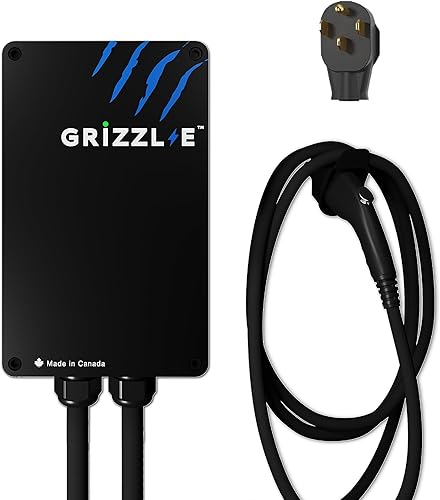
Grizzl-E Classic 40A NEMA 14-50 Charger
9.1/10 our score
See it on Amazon -
2
 Best for connected households
ChargePoint HomeFlex NEMA 14-50 Charger
8.8/10 our score
See it on Amazon -
3

- 4
 Check it
Grizzl-E Classic Connect 40A Charger
Best for unreliable internet - 5
 Check it
EVIQO 40A NACS Plug-In Charger
Best for NACS households - 6
 Best for phone-free adjustmentsCheck it
- 7
 Best for shared parkingCheck it
Which is the best plug-in Level 2 EV charger for your home?
The Grizzl-E Classic is the first choice for drivers who want straightforward charging, while connected models suit households that need schedules, reports or access control. Match the charger to your parking space and daily routine before comparing extra features.
ModestMeasure compared current settings, connector fit, cable reach, controls and safety certifications. Scores reflect those features and their fit for plug-in home charging.
A higher score doesn't override a poor connector match or an awkward cable route. A native NACS charger can be the better choice for a NACS household even when a J1772 model ranks above it.
How do these NEMA 14-50 EV chargers compare?
These chargers share a 40A plug-in ceiling, so the main differences are controls, connector type and placement. None offers a faster maximum simply because it has a longer cable or more app features.
| Product | Best for | Maximum output | Connector | Cable | Our score |
|---|---|---|---|---|---|
| Grizzl-E Classic 40A NEMA 14-50 Charger | simple home charging | 40A | Confirm vehicle fit | 24 ft | 9.1 |
| ChargePoint HomeFlex NEMA 14-50 Charger | connected households | 40A with NEMA 14-50 | J1772 | 23 ft | 8.8 |
| EVIQO 40A NEMA 14-50 J1772 Charger | off-peak charging | 40A | J1772 | 25 ft | 8.3 |
| Grizzl-E Classic Connect 40A Charger | unreliable internet | 40A | J1772 | 25 ft | 7.9 |
| EVIQO 40A NACS Plug-In Charger | NACS households | 40A | NACS | 25 ft | 7.6 |
| NexCyber 40A Plug-In Charger | phone-free adjustments | 40A | J1772 | 25 ft | 7.3 |
| Grasside 40A Plug-In Charger | shared parking | 40A | J1772 | 25 ft | 6.9 |
Use the table to narrow the field, then read the installation requirements for your finalist. Adjustable current is useful, but it doesn't remove a model's requirement for a particular circuit.
Grizzl-E Classic 40A NEMA 14-50 Charger
The Grizzl-E Classic suits drivers who want to plug in at home without building their routine around a charger app.
Grizzl-E Classic 40A NEMA 14-50 Charger: Best for simple home charging
- 40A maximum output
- Adjustable to 32A, 24A or 16A
- 24 ft cable
- UL certified
- Metal enclosure
Choose this model for straightforward home charging with four current settings and a metal enclosure. Connected models make more sense if you want charger-based schedules or energy reports.
Pros
- Four current settings
- UL certified
- Indoor or outdoor placement
Cons
- Shorter cable than the 25 ft options
- No app controls among its specified features
Its current options are 40A, 32A, 24A and 16A. Those choices help match output to an approved installation, but an electrician must confirm the complete circuit rather than choosing a setting from the breaker label alone.
Grizzl-E identifies this model as UL certified and IP67 water-resistant, with a metal enclosure for indoor or outdoor placement. Its protection features include ground-fault and over-temperature protection, plus recovery after a power outage.
The 24 ft cable should suit many garage layouts, but measure around the parked car and any shelves. Leave enough slack to connect without pulling sideways on the vehicle port.
Buy it if you want a simple charger and can use your vehicle's own charging schedule when needed. Confirm vehicle connector compatibility and any adapter requirements before ordering.
Skip it if you want charger-based energy reports or remote controls. The Classic Connect below adds connected functions while retaining offline charging capability.
ChargePoint HomeFlex NEMA 14-50 Charger
The ChargePoint HomeFlex suits drivers who want charging controls, reminders and information in a phone app.
ChargePoint HomeFlex NEMA 14-50 Charger: Best for connected households
- Up to 40A with NEMA 14-50
- ChargePoint app controls
- J1772 connector
- 23 ft cable
- UL certified
The ChargePoint app brings charging controls, reminders, charging information and smart home connections together. Choose it when those phone features fit your routine and its cable reaches comfortably.
Pros
- Charging controls and reminders
- Smart home connections
- Cold-resistant cable
Cons
- Shortest cable in this group
- Compatible Tesla vehicles need an adapter
Its app also connects with smart home devices and helps you find public charging stations. That combination makes sense if you'd rather manage home charging and public station searches through the same service.
This version uses J1772 and provides up to 40A through its NEMA 14-50 plug. The HomeFlex family's higher output applies to a hardwired installation, so don't buy this version expecting plug-in charging at 50A.
ChargePoint calls for a licensed electrician to install the unit and align its settings with the circuit and vehicle. The brand identifies it as UL certified and suitable for indoor or outdoor use, with a cold-resistant cable.
The 23 ft cable is this group's shortest, which makes mounting location worth settling before buying. Skip it if that length leaves the connector stretched across your parking space.
Choose HomeFlex when its connected controls fit your routine. For a NACS vehicle, account for the appropriate adapter rather than assuming a nonmatching connector will work directly.
EVIQO 40A NEMA 14-50 J1772 Charger
The EVIQO J1772 is a strong fit for drivers who want to schedule charging around an off-peak electricity plan.
EVIQO 40A NEMA 14-50 J1772 Charger: Best for off-peak charging
- 40A output
- 25 ft cable
- App scheduling and energy tracking
- J1772 connector
- UL and ETL certified
App schedules and energy tracking suit J1772 drivers who charge during cheaper electricity hours. Confirm the dedicated circuit and garage Wi-Fi before choosing it.
Pros
- Scheduling and energy tracking
- Side reset button
- Glow-in-the-dark connector holster
Cons
- App requires 2.4 GHz Wi-Fi
- Requires a dedicated 50A circuit
The app supports start and stop controls, reminders, energy tracking and current adjustment from 6A to 40A. Scheduling can reduce charging costs when your utility offers cheaper hours; it won't change the rate on a flat-rate plan.
EVIQO requires a dedicated 50A circuit and the specified 240V receptacle. Choosing a lower current in the app doesn't cancel that installation requirement.
Its 25 ft cable gives you room to route around a vehicle rather than straight across a walkway. The glow-in-the-dark holster helps you find the connector's storage spot after dark.
EVIQO identifies the enclosure as IP66 and NEMA 4 and the charger as UL and ETL certified. The brand also provides a side reset button and a 3-year manufacturer warranty.
Choose it for a J1772 vehicle and a reliable 2.4 GHz Wi-Fi connection at the charger. Skip this connector version if your household uses NACS vehicles and you want to avoid adapters.
Grizzl-E Classic Connect 40A Charger
The Grizzl-E Classic Connect suits drivers who want connected information while retaining the ability to charge without an online connection.
Grizzl-E Classic Connect 40A Charger: Best for unreliable internet
- 40A maximum output
- Wi-Fi monitoring and schedules
- 25 ft cable
- UL certified
- Metal enclosure
This connected Grizzl-E adds schedules, energy statistics and diagnostics while supporting charging without an online connection. It suits drivers who want remote information and offline charging capability.
Pros
- Charging works online or offline
- Adjustable current
- Metal enclosure
Cons
- Premium OCPP requires a one-time activation fee
- Maximum output requires a suitable 50A circuit
Grizzl-E Connect software provides schedules, real-time monitoring, energy statistics and diagnostics. Offline charging is useful in a detached garage or another location where internet service may drop.
That offline capability doesn't mean every remote feature works without internet access. Choose it for continued charging during a connection loss, then use online functions when the connection is available.
The charger combines a J1772 connector, 25 ft cable and metal enclosure. Its output settings span 16A to 40A, with the permitted setting tied to the approved electrical installation.
Grizzl-E identifies it as UL certified and backs it with a 3-year warranty. Premium OCPP capability carries a one-time activation fee, so establish whether you need that feature before including it in your plans.
Buy it when offline charging and remote information both matter. Skip the connected model if you only want routine plug-in charging and won't use its schedules, statistics or diagnostics.
EVIQO 40A NACS Plug-In Charger
The EVIQO NACS is the clearest choice here for a compatible NACS household that wants a direct vehicle connection.
EVIQO 40A NACS Plug-In Charger: Best for NACS households
- 40A output
- NACS connector
- 25 ft cable
- App scheduling and energy tracking
- UL and ETL certified
The native NACS connector suits a compatible NACS vehicle without an adapter at the car. App schedules and energy tracking support a regular overnight charging routine.
Pros
- Direct NACS connection
- Tesla charge-port opening button
- Scheduling and energy tracking
Cons
- J1772 adapter is not included
- App requires 2.4 GHz Wi-Fi
It connects directly to Tesla Model S, 3, X and Y and other compatible NACS vehicles. A button on the handle can open a Tesla charge port, removing a step from the daily charging routine.
This model shares the J1772 EVIQO's scheduling, energy tracking and remote current controls. Its 25 ft cable and glow-in-the-dark holster support a fixed garage or driveway charging spot.
EVIQO specifies a dedicated 50A circuit for the plug-in installation. The app needs 2.4 GHz Wi-Fi, and the brand identifies the housing as IP66 and NEMA 4 for indoor or outdoor use.
Choose it when NACS matches the vehicle you charge most often. A native connector avoids adding an adapter to every charging session.
Skip it for a J1772-only household unless you have a specific reason to choose NACS. A compatible NACS-to-J1772 adapter isn't included, and adapter approval must cover AC charging with your vehicle.
NexCyber 40A Plug-In Charger
The NexCyber suits drivers who prefer current and delay adjustments at the charger instead of on a phone.
NexCyber 40A Plug-In Charger: Best for phone-free adjustments
- 40A output
- 25 ft cable
- Screen controls
- J1772 connector
- ETL and FCC certified
Screen controls let you adjust current or delay charging without using an app. Choose a sheltered location because NexCyber advises against direct sun and rain exposure.
Pros
- Current and delay controls at the unit
- Default plug-and-play mode
- Optional app schedules and history
Cons
- Disconnect vehicle connector before screen adjustments
- Brand advises against direct sun or rain exposure
Its screen shows charging current, input voltage and other charging details. Default plug-and-play operation allows a simple routine, while the optional app adds schedules, history and notifications.
Screen adjustments require you to disconnect the vehicle connector first. Follow the control sequence in the manual rather than repeatedly pressing buttons while the car remains connected.
Current can be set from 16A to 40A, subject to the approved installation. Its J1772 connector and 25 ft cable suit a compatible vehicle parked within a comfortable cable route.
NexCyber identifies the charger as ETL and FCC certified, but advises against direct sun and rain exposure. Choose a sheltered location rather than relying on water-resistance wording to justify an exposed mounting spot.
Buy it if local controls are a priority and you can meet those placement limits. Skip it for an unsheltered driveway or if you want to change screen settings without disconnecting the car.
Grasside 40A Plug-In Charger
The Grasside suits an accessible parking space where you want to control who can start charging.
Grasside 40A Plug-In Charger: Best for shared parking
- 40A maximum output
- 25 ft cable
- J1772 connector
- App, RFID and plug-and-charge options
- ETL listed to UL-2594
RFID and app authorization help restrict charger use in an accessible parking space. Enable plug-and-charge through the app if you prefer charging without authorization each time.
Pros
- RFID access control
- App and screen current settings
- Metal case
Cons
- App setup is needed to enable plug-and-charge
- Compatible Tesla vehicles need an adapter
RFID and app authorization offer ways to restrict use. For a private garage, you can enable plug-and-charge through the app and avoid presenting a card for each session.
Initial app setup involves Bluetooth pairing followed by connection to 2.4 GHz Wi-Fi. Complete that setup before expecting plug-and-charge mode to work.
Current adjustment is available through both the app and screen buttons. The charger has a J1772 connector, metal case and 25 ft cable, with an EV-grade receptacle and 50A circuit specified for installation.
Grasside identifies it as ETL listed to UL-2594 and IP65 water-resistant. Its built-in GFCI protection doesn't determine which protection your home's circuit needs; have the electrician follow local requirements.
Choose it when access control solves a real parking problem. Skip it if you want the simplest setup and won't use authorization features, or if a native NACS connector would better match your car.
What should you check before buying a plug-in EV charger?
Confirm the circuit, vehicle connector and cable route before choosing smart features. These checks prevent the most expensive mismatches.
Does your plug-in Level 2 EV charger have the right circuit?
Have an electrician assess the receptacle, breaker, wiring, panel capacity and installation location together. An existing outlet may need work even if the charger's plug fits.
EV charging is a continuous load, so output must stay within the approved circuit's continuous capacity. Our EV charger breaker-size guide explains the relationship between charging current and breaker size.
Don't assume adjustable output makes any charger suitable for any circuit. Follow the exact model's instructions, including a dedicated-circuit requirement where specified.
Does the connector match your vehicle?
Choose the vehicle-side connector from your exact car's charge port, not its brand name. J1772 and NACS describe that connection; NEMA 14-50 describes the separate plug at the wall.
Our J1772 vs NACS guide explains the difference. For a mixed household, decide which car will charge most often and confirm a suitable AC adapter for the other.
Will the cable reach your parked car?
Measure from the proposed charger location to the charge port along the route the cable will actually take. Include bends, slack and the space needed to open doors.
Check both normal and alternate parking positions if 2 vehicles share the garage. A cable that reaches only when you park precisely can become a daily nuisance.
Don't plan around a household extension cord. Read our EV charger extension cord guide before asking an electrician to assess a better outlet or mounting location.
Are the safety credentials clear?
Check the exact model's certification, not just a familiar logo in a brand's advertising. UL certification and ETL certification to applicable UL standards are different labels, and FCC compliance addresses a different purpose.
Our guide to UL and ETL on EV chargers explains those terms. Certification supports equipment selection, while correct installation and suitable placement remain essential.
How much charging power do you actually need?
Choose enough output to replace your usual daily driving during the hours you park at home. Maximum output matters less when a lower setting already meets that need.
Your vehicle's onboard AC charger can limit how much power it accepts. A higher-rated wall unit won't force the car to charge beyond that limit.
At 240V, 40A corresponds to about 9.6 kW before charging losses. Actual battery charging speed varies with the vehicle, available power, battery conditions and the car's settings.
For a rough planning estimate, divide the energy you need to replace by the charging power available. Allow extra time for losses rather than using the result as an exact finish time.
Avoid comparing chargers by miles added per hour alone, since vehicles use different amounts of energy per mile. Our guide to Level 2 EV charger amps helps you match output to your driving needs.
How should you set up your plug-in charger?
Settle mounting, current limits and charging schedules before the first regular charging session. Plug-in describes the electrical connection, not a reason to skip installation planning.
- Have the electrician approve the circuit and receptacle for the exact charger.
- Mount the unit as directed, with its weight supported by the bracket rather than the wall plug.
- Position the connector holder where the cable won't cross a doorway or rest under tires.
- Configure the permitted charging current using the manufacturer's setup process.
- Pair the app if needed and confirm the charger's location has the required network coverage.
- Connect the vehicle and check its display for the expected charging status.
Follow the specified orientation and placement for the supply cord. A nearby outlet still needs to be positioned so the cord reaches without strain.
For outdoor placement, the wall receptacle and its weather protection need attention as well as the charger enclosure. A water-resistant charger doesn't make an exposed electrical connection suitable.
Should the car or charger control the schedule?
Use one schedule as the main control unless you have a clear reason to coordinate both. Conflicting schedules can leave the car waiting even though each device appears correctly configured.
Start with your utility's actual off-peak window, then allow enough time to reach your target charge level. Check weekday, weekend and seasonal rate differences if your plan has them.
Use the vehicle's recommended daily charge limit. The best routine leaves the car ready for your next drive without requiring you to manage each session from your phone.
How do you care for a plug-in EV charger?
Keep the connector clean, the cable supported and the wall connection undisturbed during normal use. A few regular checks help you spot damage before the next charge.
Store the connector in its holster instead of leaving it on the ground. Coil the cable loosely and avoid sharp bends, tight knots or routes where garage doors can pinch it.
Wipe accessible surfaces as the manual directs. Don't spray cleaners into the connector, open the enclosure for routine care or wash the unit with a pressure washer.
Look for damaged insulation, cracked connector parts, discoloration or a loose wall plug. Stop using equipment with visible damage, a burning smell or repeated faults and arrange professional inspection.
Treat plug-in capability as a way to remove the unit when necessary, rather than a reason to unplug it daily. Stop charging through the car or charger before disconnecting, and follow the manual's sequence.
If charging stops, check the vehicle's charge limit, schedules and charger status first. Use only the documented reset process; repeated breaker trips or recurring faults need diagnosis rather than repeated resets.
Is a plug-in charger better than a hardwired charger?
A plug-in charger makes sense with a suitable existing outlet, while hardwiring may be a better fit for a permanent installation or higher output needs. Compare the complete installation before deciding.
Plug-in equipment can be removed without disconnecting fixed wiring, but another location still needs a suitable circuit. Don't assume a receptacle at a second home or rental property is ready for the same charger.
Hardwiring removes the receptacle connection and can support output beyond this group's plug-in limit when the equipment, vehicle and circuit allow it. It may also avoid adding an outlet solely to connect a permanently mounted charger.
Our hardwired vs plug-in EV charger guide explains the trade-offs. Use the Level 2 charger installation cost guide to plan for the electrical work as well as the charger.
Which mistakes should you avoid with a NEMA 14-50 charger?
Avoid choosing by plug shape or maximum amps alone. The charger needs to fit the installation and your daily use.
- Buying before measuring: settle the cable route and mounting spot before ordering.
- Expecting 50A charging from a 50A outlet: the outlet designation doesn't establish permitted continuous charging output.
- Using current adjustment as an installation shortcut: lower output doesn't erase a manufacturer's circuit requirements.
- Assuming an adapter is included: check connector compatibility and approved adapter needs separately.
- Expecting schedules to lower every bill: savings depend on your electricity plan.
- Ignoring local protection requirements: built-in GFCI protection doesn't replace the electrician's assessment.
- Resetting recurring faults: find the cause of repeated interruptions before resuming regular use.
A charger with fewer functions can be the better buy when it fits your car and routine. Pay for reports, access control or connected features when they solve a specific need.
Which best plug-in Level 2 EV charger should you choose?
Choose the Grizzl-E Classic for simple home charging, ChargePoint for connected controls, or EVIQO J1772 for off-peak schedules and energy tracking. Choose EVIQO NACS when its native connector matches your vehicle.
Pick Classic Connect when offline charging matters alongside connected information. Choose NexCyber for local screen adjustments in a sheltered spot, or Grasside when RFID access control helps manage shared parking.
Before ordering, have the electrical setup approved and measure the cable route with the car parked. For choices beyond NEMA 14-50 plug-in models, compare the best Level 2 EV chargers for home.
Our top 3 picks at a glance
-
1
Best for simple home charging
Grizzl-E Classic 40A NEMA 14-50 Charger
9.1/10 our score
See it on Amazon -
2
Best for connected households
ChargePoint HomeFlex NEMA 14-50 Charger
8.8/10 our score
See it on Amazon -
3
Frequently asked questions
What is a plug-in Level 2 EV charger?
A plug-in Level 2 EV charger connects to a suitable 240V outlet rather than being wired directly into the circuit. These picks use NEMA 14-50 plugs, but the receptacle, wiring and circuit still need to meet each charger's instructions and local electrical requirements.
How many amps can a NEMA 14-50 EV charger use?
These NEMA 14-50 plug-in chargers provide up to 40A on an approved installation; EV charging is a continuous load, so a 50A circuit generally supports 40A charging; lower settings don't automatically make every installation suitable. Have an electrician confirm the charger instructions, wiring, receptacle and circuit together.
Can a NEMA 14-50 charger work with a Tesla?
Yes, when the vehicle-side connector matches the Tesla or you use an approved compatible adapter. The EVIQO NACS model connects directly to Tesla Model S, 3, X and Y; a J1772 model requires a suitable adapter, so check your vehicle guidance and what accessories you already have.
Is a NEMA 14-50 outlet the same as a dryer outlet?
No, a dryer outlet isn't automatically a NEMA 14-50 receptacle, and a similar appearance doesn't establish compatibility; check the receptacle designation and have an electrician verify its circuit and condition. Don't use an adapter to make an unsuitable dryer circuit fit one of these chargers.
Should I choose a plug-in or hardwired EV charger?
Choose plug-in when you have a suitable outlet and value being able to disconnect the charger for removal; hardwiring can suit a permanent installation or higher output needs. Compare the full electrical work, local requirements and equipment limits in our plug-in vs hardwired EV charger guide.