Hardwired vs Plug-In EV Chargers: Which Is Better? (October 2026)
Choose hardwired for a permanent installation or plug-in for a verified, compatible outlet. The hardwired vs plug in EV charger decision comes down to circuit capacity, daily charging needs and whether you'll move the unit.
On this page (11 sections)
- Hardwired vs plug-in EV charger: what changes?
- Which connection fits your home and driving?
- Who should buy each of these chargers?
- Does hardwired charge faster than plug-in?
- Which installation is simpler and worth paying for?
- How should you plan the mounting location?
- What should you do before the first charging session?
- How do you care for either charging setup?
- Which mistakes should you avoid?
- Can you switch from plug-in to hardwired later?
- How do you make the final hardwired vs plug-in EV charger decision?
Choose hardwired for a permanent charging location or plug-in for a verified, compatible outlet. The hardwired vs plug in EV charger decision starts with your home's circuit capacity and daily driving, then comes down to how much you value a removable connection.
Hardwiring connects the charger directly to home wiring. Plug-in equipment connects through a receptacle, adding flexibility but also an outlet connection that needs proper installation and care.
Both can serve overnight charging well. Neither can overcome a vehicle's charging limit or make an undersized circuit suitable.
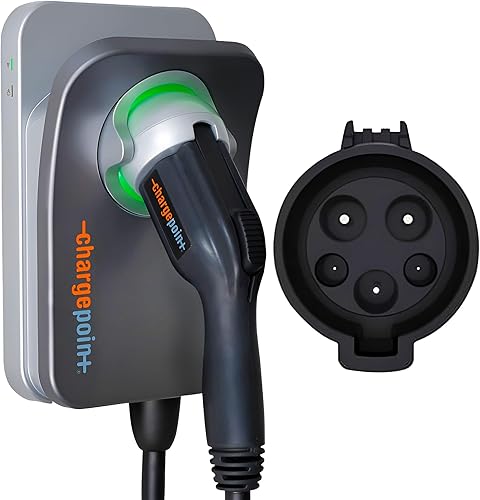 Best for permanent garage setups
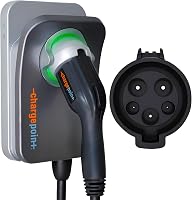
ChargePoint HomeFlex 50A Hardwired Charger

Hardwired vs plug-in EV charger: what changes?
The main difference is how the charger connects to power, not how you connect it to the car. Hardwiring removes the wall receptacle, while plug-in equipment lets you disconnect the unit without opening its electrical connections.
A hardwired setup suits a charger that will stay on the same wall for years. Moving or replacing it generally involves an electrician.
A plug-in setup suits a compatible outlet you can keep accessible. The charger still needs secure mounting, and its power cord shouldn't pull on the receptacle.
Don't confuse the wall connection with the vehicle connector. A charger can fit your home's outlet and still need a vehicle-approved adapter to connect to your car.
Which connection fits your home and driving?
Choose the installation that replaces your daily driving within your parking window. Maximum output matters most when your car arrives with a large energy shortfall and has little time before the next trip.
Start with how far you normally drive, how long the car stays parked and its maximum AC charging input. Those details tell you more than the largest amperage printed on a charger.
A driver parked overnight may have little reason to chase the highest output. Someone sharing a charging space or returning late before an early departure has a stronger reason to compare charging power.
Panel capacity comes next. A smaller configured load may meet your needs without the electrical work required for a higher-output installation.
For a broader equipment checklist, our guide to choosing a home Level 2 EV charger covers the charger, vehicle and garage as one system.
Hardwired vs plug-in EV chargers for owners and renters
Hardwired fits settled plans; plug-in fits an approved removable setup. Your right to alter the property matters as much as your preferred connection.
Homeowners adding a new circuit should ask for both installation options before choosing. Installing an outlet solely to gain removability may add a component you won't use.
Renters need permission for mounting and electrical changes, even with a plug-in charger. An existing receptacle doesn't establish permission to use it for sustained charging.
If you expect to move, consider where the charger would go next. Taking it with you is useful only if the next property's electrical setup and your vehicle remain compatible.
Who should buy each of these chargers?
Choose the hardwired HomeFlex for a fixed installation, the plug-in HomeFlex for app controls at an outlet, or Grizzl-E for an outdoor parking setup. Their useful differences become clearer once the connection plan is settled.
ChargePoint HomeFlex hardwired: for a fixed charging location
The hardwired HomeFlex suits a homeowner planning a permanent charger who wants app controls, reminders and charging information. Its adjustable output gives the electrician room to configure it around available capacity.
Choose it if you want fewer detachable connections between the circuit and charger. It also fits drivers who already use ChargePoint's app and want home charging controls there.
Skip it if taking the charger between properties is a priority. Some functions require Wi-Fi, so check connectivity at the mounting spot if those features drive your choice.
Both ChargePoint models here use J1772 vehicle connectors, and Tesla use requires an adapter. Check your vehicle manual rather than choosing a connector from the vehicle's brand alone.
ChargePoint HomeFlex plug-in: for charging controls at an existing outlet
The plug-in HomeFlex suits a driver with a suitable receptacle who wants app controls without choosing a direct-wired installation. Reminders and charging information are useful if you want to keep track of when the car charges.
Its removable connection also helps when replacing the unit or moving house. That convenience doesn't remove the need for professional circuit checks.
Skip it if the only available outlet is damaged, inaccessible or poorly placed for parking. If fixing the location requires a new circuit anyway, compare hardwiring before committing to another receptacle.
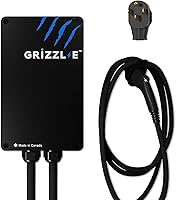
Grizzl-E Classic: for an outdoor parking space
The Grizzl-E Classic suits an outdoor charging position where its metal enclosure and cable reach fit the site. Grizzl-E specifies an IP67 water-resistance classification and suitability for normal and cold weather.
Its selectable current settings help match the charger to a properly planned circuit. Have the electrician set it according to the instructions rather than choosing the highest setting yourself.
Skip it if you want the ChargePoint app features described above, or if reaching the car would require stretching the cable. Grizzl-E describes compatibility with North American EVs and PHEVs, but confirm your car's connection requirements before ordering.
Does hardwired charge faster than plug-in?
Hardwired can support higher output on suitable equipment, but equal power means similar charging speed regardless of the wall connection. The vehicle's onboard AC charger sets another limit.
The hardwired HomeFlex supports up to 50A. The plug-in HomeFlex and Grizzl-E models here support up to 40A through their NEMA 14-50 connections.
At a nominal 240V, those maximum currents equal about 12 kW and 9.6 kW before charging losses. A vehicle that accepts less won't gain the full benefit of the higher figure.
Circuit amperage and charging amperage aren't interchangeable. EV charging is a continuous load, so the charger setting must leave the required margin rather than equal the breaker's number.
For Grizzl-E, the supported output and circuit pairs are 40A on 50A, 32A on 40A, 24A on 30A, and 16A on 20A. The electrician must also confirm the receptacle arrangement and instructions permit the planned installation.
Don't apply one model's settings to another charger. Our EV charger breaker size guide explains how charging current relates to circuit sizing.
Which installation is simpler and worth paying for?
Plug-in is often simpler when a suitable receptacle already exists. When starting from scratch, compare complete installation quotes rather than assuming an outlet will reduce the work.
Both quotes should cover the panel assessment, circuit route, protection, mounting and charger configuration. Ask whether permits and inspection are included where required.
An old outlet may need replacement or wiring corrections. Its shape alone can't confirm conductor size, connection condition or suitability for hours of charging.
Hardwiring avoids buying and maintaining a receptacle at the charging point. It still needs correct wiring and terminations, so removing the outlet doesn't remove installation risk.
Ask the electrician about required ground-fault protection and compatibility between the selected charger and circuit protection. Repeated trips need diagnosis, not bypassed protection.
Our EV charger installation cost guide explains why panel work, routing distance and site conditions can matter more than connection style.
How should you plan the mounting location?
Place the charger where both its power connection and vehicle cable fit without strain. Plan around the car's charge port with the vehicle parked as you actually use the space.
Measure the cable path around the car rather than taking a straight-line wall measurement. Leave enough slack to connect comfortably without putting the handle or cable under tension.
Also consider a second parking position, garage door movement and storage shelves. A cable that works only when the car is parked perfectly can become a daily nuisance.
For plug-in equipment, have the electrician confirm receptacle height and orientation against the charger's power cord. Don't solve a poor fit by hanging the unit from its plug.
Outdoor placement needs attention to the charger, receptacle, covers, wiring entries and mounting surface. An outdoor-capable charger doesn't make every surrounding electrical connection weather-ready.
Before relying on an existing outlet, read our guide to charging an EV from a NEMA 14-50 receptacle.
What should you do before the first charging session?
Start with the current setting confirmed and the cable route clear. Keep a record of the circuit capacity and charger configuration so nobody later raises the output by guesswork.
Ask the installer to identify the breaker and explain normal startup behavior. Keep the manual and any installation paperwork where you can find them when changing vehicles or replacing equipment.
For app-controlled charging, decide whether the vehicle or charger will manage the schedule. Conflicting schedules can leave the car waiting for a charging window that never overlaps.
Check your utility's actual off-peak hours before setting a timer. Allow enough charging time to meet your departure needs, especially after an unusually long drive.
A car that charges slowly may be following its own current limit or schedule. Check those settings before assuming the wall connection needs replacing.
How do you care for either charging setup?
Keep the cable supported, the connector clean and the power connection undisturbed. A brief visual check while plugging in can catch damage before the next long session.
Look for cuts, crushed sections, debris in the connector or changes around the outlet. Stop charging for discoloration, a burning smell, unusual heat, a loose plug or repeated breaker trips.
Handle the vehicle connector by its grip rather than pulling the cable. Store the cable in loose loops off the driving path, following the manufacturer's instructions.
Stop the charging session before disconnecting equipment. A plug-in unit can be removable without needing to be unplugged from the wall after every drive.
Follow the manual for cleaning and keep liquids away from electrical contacts. Don't open the enclosure or try to tighten electrical connections yourself.
Which mistakes should you avoid?
The biggest mistake is buying for maximum amperage before checking the circuit and car. Several smaller planning errors can also turn an otherwise suitable charger into an awkward setup.
- Treating a matching outlet as approval. Have its wiring, protection and condition checked before sustained charging.
- Turning up current after a slow session. First check vehicle limits, schedules and the installer's configured setting.
- Using an extension cord to reach. Move the charging point or choose a suitable location; our EV charger extension cord guide explains the concerns.
- Planning around today's car alone. Check how another charge-port position would affect cable reach.
- Ignoring removal work. Hardwired equipment needs an electrical plan when moving, while a plug-in unit still needs safe mounting and disconnection.
- Assuming outdoor use means no site planning. Protect the complete installation, including the receptacle and cable path.
Can you switch from plug-in to hardwired later?
Convert only if the exact charger supports that configuration and an electrician approves the circuit. A removable power cord doesn't by itself establish permission to rewire the unit.
Confirm the manufacturer's instructions before buying with conversion in mind. Don't assume that every version sharing a product family name permits the same changes.
Removing a receptacle also doesn't raise the circuit's available capacity. A higher output setting may require different wiring, protection or panel work.
If a future move or vehicle change is likely, tell the electrician now. Planning an accessible wiring route can be more useful than buying output you can't currently use.
How do you make the final hardwired vs plug-in EV charger decision?
Choose hardwired when the charging location is permanent, particularly when you're already adding a circuit. Choose plug-in when a verified outlet serves the parking space and keeping the charger removable has real value.
For a fixed installation with app controls, consider the HomeFlex hardwired model alongside the best hardwired EV chargers. For a suitable outlet, choose the plug-in HomeFlex for its app features or Grizzl-E when its enclosure and outdoor fit suit your space.
Compare those outlet options with the best plug-in EV chargers before ordering. Ask for a quote tied to the exact model, configured current and mounting position.
If the hardwired vs plug in EV charger choice still feels premature, first decide whether you need Level 2 charging at home. The right setup is the one that reliably covers your driving within the time your car stays parked.
Frequently asked questions
Is a hardwired EV charger better than a plug-in one?
Hardwired is the better fit for a permanent charging location, especially when you need a new circuit anyway; plug-in makes sense when a suitable outlet already exists or you expect to take the charger when moving. Neither connection guarantees faster charging; circuit capacity and vehicle limits still control the result.
Can a plug-in EV charger use a regular outlet?
The plug-in models here need a 240V NEMA 14-50 receptacle, not a regular household outlet; other chargers are designed for household outlets, but you can't make these models suitable by adding an adapter. Have an electrician confirm the outlet, wiring and charger setting before use.
Can I install a hardwired EV charger myself?
Use a qualified electrician for these hardwired installations, which connect directly to home wiring; the work includes circuit sizing, protection, mounting and charger configuration, with permits or inspections where required. Our guide to installing an EV charger yourself explains the checks involved before you plan the job.
Does a plug-in EV charger charge more slowly?
A plug-in charger isn't slower when both setups deliver the same power and the vehicle accepts it; hardwiring can allow higher output on equipment designed for it, but your car must support that input. Compare supported charging power and your overnight parking time before paying for extra capacity.
Can I unplug and move a plug-in charger?
Yes, but stop the charging session and follow the manufacturer's disconnection instructions before unplugging it; the next location needs its own suitable outlet and circuit, and the current setting may need to change. A removable plug doesn't make every unfamiliar garage or travel outlet suitable for charging.