Can You Use an Extension Cord With an EV Charger?
An EV charger extension cord is usually the wrong fix for a short charging cable. Use one only if both the charger and vehicle makers explicitly allow the exact cord and setup; otherwise, change your parking position or charger location.
On this page (8 sections)
- Can you use an extension cord with an EV charger?
- Why can an extension cord be risky?
- What should you do if the charging cable is too short?
- Which chargers can help you avoid an added extension?
- Should you move the outlet or choose a hardwired charger?
- How should you set up and care for the charging cable?
- What mistakes should you avoid before buying?
- Which setup should you choose instead of an EV charger extension cord?
An EV charger extension cord is usually the wrong way to fix a cable that won't reach. Use the charger's supplied cable, and add an extension only when both the charger and vehicle makers explicitly allow the exact cord and setup.
The better buy may be a charger with more usable reach, or an outlet closer to your parking spot. The 3 chargers below offer different ways to plan that setup; none is a standalone extension cord.
Can you use an extension cord with an EV charger?
Usually, you should plug an EV charger directly into its intended outlet. Charging draws current for hours, so every cable and connection must support a sustained load.
Check the charger and vehicle manuals before buying any extra cable. If either prohibits an extension, a thicker cord or higher advertised capacity does not override that instruction.
Distinguish a wall-side extension cord from an extension added between the charger and vehicle. They connect at different points, but neither is automatically approved because its plugs fit.
An adapter also solves a different problem: connector compatibility, rather than reach. Our J1772 vs NACS guide explains which vehicle connection you need before you choose charging equipment.
Why can an extension cord be risky?
An added cord introduces more places for heat and damage to develop. A loose plug connection can heat up even when the cable itself appears thick enough.
Longer cable runs can also increase voltage drop, while a tightly coiled cable can retain heat. Neither problem is solved by a weather-resistant jacket alone.
The physical route matters too. A cord across a driveway can be crushed by tires, caught under a garage door, or pulled when someone trips over it.
Does a heavy-duty EV charger extension cord solve the problem?
No: “heavy-duty” is not approval for EV charging. Length, conductor size, connectors, current capacity, and the permitted conditions of use all matter.
Don't build a setup around that phrase or a plug shape. Ask an electrician to assess the circuit, and obtain clear manufacturer instructions before considering an added cord.
What should you do if the charging cable is too short?
Measure first, then change the parking position or installation location. A different parking angle may solve the problem without buying equipment.
Measure along the route the cable will actually follow, from the planned charger position to the vehicle inlet. Include bends around obstacles and enough slack to connect without pulling on the inlet.
Check the route with the car parked normally, including room to open doors. If 2 vehicles share the space, measure to both inlet positions rather than assuming their ports sit in the same place.
A longer supplied cable helps only if its route stays clear of tires, doors, and walking paths. Don't count on stretching it diagonally across a busy garage.
For a fixed installation, ask an electrician about moving the charger or outlet. Our guide to EV charger installation costs explains the work that can affect that choice.
Which chargers can help you avoid an added extension?
Choose according to usable reach, electrical supply, and daily charging needs. These options replace or establish a charging setup; they do not extend a charger you already have.
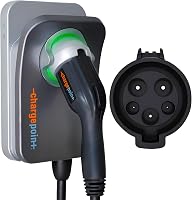
ChargePoint HomeFlex: for app control at a fixed parking spot
The ChargePoint suits drivers who want app controls and a planned home installation. Its app supports charging reminders, charging information, and smart home connections.
This version uses a 240V NEMA 14-50 outlet and a J1772 vehicle connector. Tesla vehicles require a compatible adapter, and ChargePoint specifies installation by a licensed electrician.
The plug-in version provides up to 40A; don't confuse that with the higher output available from a hardwired HomeFlex. Your electrician should match the charger setting to the circuit and vehicle.
Choose it when its cable reaches comfortably and you want app features. Skip this version if you lack a suitable outlet or the route still requires stretching the cable.
Read what a NEMA 14-50 outlet means for EV charging before planning the connection.
Grizzl-E Classic: for a simple indoor or outdoor setup
The Grizzl-E suits drivers who want a metal enclosure and adjustable charging current. Its indoor/outdoor design makes it worth considering when the charging position is outside the garage.
Its current settings are 16A, 24A, 32A, and 40A. Have an electrician choose the appropriate setting rather than selecting the highest one simply because it is available.
Grizzl-E specifies a 50A circuit for its maximum output. A lower setting still needs a suitable circuit and receptacle; changing the setting does not repair a worn outlet.
Choose it when the included cable fits your measured route and you prefer a simple charging unit. Skip it if you only have a household 120V outlet or need more reach than it supplies.
Lectron Level 1: for long parking sessions near a household outlet
The Lectron suits modest daily charging needs with long plug-in time. Its Level 1 design is better matched to overnight or extended parking than quick charging between trips.
It has a J1772 connector and a supplied cord described as 16 feet long. Confirm the usable reach and connection arrangement in the manual before choosing it for your parking space.
Lectron calls that supplied cord an extension cord, but that wording does not authorize adding another cord. This is a complete charger, not an accessory for extending an existing one.
Its 15A specification also deserves attention: a household plug fitting the socket does not establish that the circuit supports that sustained load. Have the outlet and circuit checked before use.
Skip it if you need substantial range back quickly. Our Level 1 vs Level 2 comparison helps match charging speed to your routine.
Should you move the outlet or choose a hardwired charger?
Move the connection point when cable length cannot solve the route safely. Buying a different charger won't help if every cable must cross a doorway or driveway.
A relocated outlet can suit a plug-in charger, while a hardwired installation removes the wall plug connection. Both require planning around panel capacity, cable routing, and the vehicle's parking position.
Compare hardwired vs plug-in EV chargers before choosing equipment. For circuit planning, see what size breaker a Level 2 EV charger needs.
Don't select a breaker from the plug shape alone. The charger setting, wiring, circuit protection, and installation requirements must work together.
If you're considering doing the work, read whether you can install an EV charger yourself. Use a licensed electrician to assess changes to the circuit or charger location.
How should you set up and care for the charging cable?
Support the equipment and protect its connections from strain. Follow the mounting instructions so the control unit's weight does not hang from the wall plug.
Before connecting, check for cracked insulation, damaged pins, discoloration, or a loose outlet. Don't force a connector that will not seat properly.
Keep connections away from standing water and follow the manual's outdoor-use limits. A charger's weather protection does not automatically cover an added cord or exposed connection.
During charging, keep excess cable arranged as directed rather than tightly bundled. Don't close a garage door over it, run it beneath a rug, or let tires cross it.
After use, store the cable in broad loops on its intended holder and protect the vehicle connector from dirt. Pull on the plug body when disconnecting, rather than tugging the cable.
Stop charging for unusual heat, a burning smell, visible damage, or repeated faults. Use the equipment's stop procedure if safe, and have the cause checked before restarting.
What mistakes should you avoid before buying?
Don't buy extra cable before checking the whole setup. A reach problem, an outlet problem, and a connector mismatch need different solutions.
Avoid these common mistakes:
- Buying by maximum output: more charging current does not add cable reach.
- Assuming portability means outlet suitability: each location still needs a compatible circuit.
- Joining cords or adapters: extra connections do not create an approved charging arrangement.
- Ignoring inlet position: a cable that reaches one EV may fall short on another.
- Treating certification as blanket approval: a charger's certification does not approve accessories added later.
Our guide to UL and ETL marks on EV chargers explains what those marks mean. Check the exact equipment and installation instructions before charging.
Which setup should you choose instead of an EV charger extension cord?
Choose ChargePoint for app controls, Grizzl-E for a simple Level 2 setup, or Lectron for slow charging during long parking sessions. Each choice depends on a suitable electrical supply and a supplied cable that reaches without strain.
If your current charger works well but falls short, price the location change before replacing it. If no direct cable route works, solve the installation problem before buying an EV charger extension cord.
Use the home EV charger options to compare equipment after you've measured the route and confirmed the circuit.
Frequently asked questions
Can you use an extension cord with an EV charger?
Usually, no: use the charger's supplied cable and plug directly into a suitable outlet. Add an extension only if both the charger and vehicle makers explicitly approve the exact cord and setup.
If either manual prohibits extensions or leaves the requirements unclear, change the parking position or charging location.
Can I use a heavy-duty extension cord for a Level 2 EV charger?
A heavy-duty label does not establish that a cord is suitable for Level 2 EV charging. Its connections, length, electrical capacity, and weather protection must meet the requirements of an explicitly approved setup.
Have a licensed electrician assess the circuit, and follow both the charger and vehicle instructions.
Is it safe to use an extension cord with a portable EV charger?
Portability does not make an added extension safe. A portable charger still draws current for hours, and an unsuitable cord or loose connection can overheat.
Use the supplied equipment as directed, confirm the outlet can support the charging load, and add no extension without explicit approval from both manufacturers.
What can I do if my EV charger cable is too short?
Start by changing the parking position or choosing a charger whose supplied cable reaches the vehicle inlet with slack. If neither works, have an electrician assess moving the outlet or charging unit.
Measure the actual cable route before buying, including bends around obstacles and room to connect without pulling.