How Many Amps Does a Level 2 EV Charger Need?
Choose Level 2 EV charger amps to match your daily energy needs, your car's AC limit, and an approved circuit. For overnight charging, 16–32 amps may cover your driving; 40–48 amps gives more power when your car and electrical setup support it.
On this page (8 sections)
- How many amps does a Level 2 EV charger need?
- How does circuit size affect charger amps?
- What limits the charging amps your car can use?
- Which charger fits your amperage and parking setup?
- Is plug-in or hardwired better for your home?
- What should you arrange before installation?
- How should you set and care for a home charger?
- Which Level 2 EV charger amps should you choose?
The right Level 2 EV charger amps are the lowest supported setting that replaces your daily driving energy before you leave again. Your car's AC charging limit and your home's electrical capacity set the upper limits.
For long overnight stays, modest output may be enough. Higher current helps most when you drive farther, have a short charging window, and own a car that can accept the extra power.
How many amps does a Level 2 EV charger need?
A home Level 2 charger may supply 16 to 50 amps, depending on the model and installation. Choose by the energy you need each day, rather than the largest number on the box.
At 240 volts, multiply amps by 240 and divide by 1,000 to estimate power in kilowatts:
| Charging current | Power at 240V | Typical minimum circuit rating* |
|---|---|---|
| 16A | 3.8 kW | 20A |
| 24A | 5.8 kW | 30A |
| 32A | 7.7 kW | 40A |
| 40A | 9.6 kW | 50A |
| 48A | 11.5 kW | 60A |
*These circuit ratings apply the usual 125% continuous-load sizing rule. Equipment instructions and local requirements still govern the installation.
These figures describe electrical input before charging losses. They aren't fixed miles-per-hour figures because vehicles use different amounts of energy per mile.
How do you calculate the Level 2 EV charger amps you need?
Divide daily energy use by available charging hours to estimate the power you need. Then allow extra time for charging losses and days when you arrive home later.
For example, driving 40 miles at an assumed 3 miles per kWh uses about 13.3 kWh. Over 8 hours, that requires about 1.7 kW before losses, so even the lowest setting in the table offers room above that estimate.
Use your car's actual energy history when possible. Don't size everyday charging around filling an empty battery unless that is a regular need.
How does circuit size affect charger amps?
EV charging is a continuous electrical load, so a circuit's breaker rating is usually higher than the allowed charging current. A 50 amp breaker does not mean you can charge continuously at 50 amps.
The breaker protects the circuit, but it doesn't prove the wiring, connections, or panel can support a charger. An electrician needs to assess those parts together.
An outlet's shape also doesn't establish its safe charging output. A NEMA 14-50 receptacle needs a suitable circuit and sound connections before it serves an EV charger.
See what size breaker a Level 2 EV charger needs for the circuit calculation. Avoid treating a breaker swap as a way to gain charging speed.
What limits the charging amps your car can use?
Your vehicle's onboard AC charger limits how much power it can take from a home charger. A higher-output wall unit cannot raise that limit.
Check the vehicle manual for maximum AC charging power, usually given in kW. A large DC fast-charging figure describes a different charging system and doesn't tell you what the car accepts at home.
The car may also reduce power because of battery temperature, charge level, or its own settings. If charging seems slow, check both the vehicle and charger controls before assuming the hardware needs replacing.
Our Level 1 and Level 2 comparison explains the change from a household outlet. For the broader equipment choice, see how to choose a home EV charger.
Which charger fits your amperage and parking setup?
Choose the connection type and installation style first, then compare controls and output. A suitable connector and enough overnight charging time matter more than a small increase in maximum current.
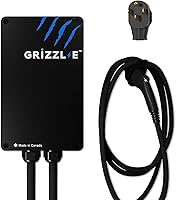
Grizzl-E Classic: for a suitable existing outlet
Choose the Classic if you want a plug-in unit and don't need phone-based charging controls. Its metal enclosure and 24 ft cable suit a fixed parking spot where an electrician has approved the outlet.
Skip it if your routine requires output above its maximum or you want app-based energy records. Don't assume its lower settings let you connect it to any available outlet through an adapter.
Grizzl-E hardwired model: for J1772 charging with schedules
Choose this model if you want J1772, Wi-Fi scheduling, and energy tracking in a fixed installation. Charging continues without an online connection, which helps where garage Wi-Fi is unreliable.
Grizzl-E includes a mounting bracket and hardwire kit, but the electrical work still needs a site-specific quote. Skip it if you need a removable plug-in connection; premium OCPP capability also carries a separate activation fee.
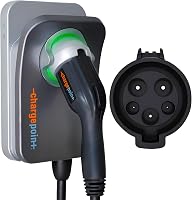
ChargePoint HomeFlex: for app controls and flexible output
Choose HomeFlex if you want charging reminders and information in the ChargePoint app. Its J1772 connector and 23 ft cold-resistant cable suit a matching car parked within reach.
Skip it if you want a direct NACS connection without an adapter. Some functions require Wi-Fi, so check reception at the mounting spot before making app features central to your choice.
The small output increase over a 48 amp unit should not drive the purchase alone. Your car must accept it, and the installation must support it.
EVIQO: for direct NACS charging
Choose EVIQO if your car has a NACS port and you want a direct connection. Its connector includes a Tesla charge-port opening button, while the glow-in-the-dark holster helps you dock it after dark.
The app supports schedules and energy tracking over a 2.4 GHz home Wi-Fi network. Skip it if you need a plug-in unit or prefer a direct J1772 connection; J1772 cars require a compatible adapter that isn't included.
Is plug-in or hardwired better for your home?
Choose plug-in when a suitable outlet already exists and the available output meets your needs. Choose hardwired when you want a fixed installation or higher current supported by the equipment.
A plug-in charger adds a receptacle connection that needs attention during use. Hardwiring removes that connection, though it still requires correct equipment selection and installation.
Read how plug-in and hardwired EV chargers compare before committing. For an existing receptacle, charging from a NEMA 14-50 outlet covers the checks that matter.
What should you arrange before installation?
Ask an electrician to confirm panel capacity, circuit design, and the permitted current setting before ordering. Share the exact charger model and your vehicle's AC charging limit.
Measure the cable route from the proposed mounting point to the car's port. Allow slack for normal parking differences without leaving the cable stretched across a walkway or under a tire.
Ask whether permits, inspection, outdoor placement, or local requirements affect the job. Request separate quotes for the output you need now and any larger circuit you are considering.
The EV charger installation cost guide explains what changes the work involved. For the division between planning and electrical work, read whether you can install an EV charger yourself.
How should you set and care for a home charger?
Have the installer establish the circuit-related current limit during commissioning. A temporary app setting or the car's current slider should not substitute for that installation limit.
If your utility offers cheaper charging hours, schedule enough time to replace your daily energy use. Start with scheduling in either the car or charger so conflicting timers don't leave you short.
Keep the connector docked and the cable loosely stored off driving paths. Check for damaged insulation, bent contacts, discoloration, or unusual heat, and stop using the equipment if damage appears.
Don't add an ordinary extension cord to solve a reach problem. Our EV charger extension cord guide explains why placement should address cable reach before installation.
Which Level 2 EV charger amps should you choose?
Choose 16–32 amps when that output covers your daily driving within your parking window. Move to 40–48 amps when shorter charging windows or higher energy use justify it and your car can use the power.
Pick the Classic for a suitable plug-in setup, Grizzl-E's hardwired model for J1772 charging with schedules, HomeFlex for ChargePoint app controls, or EVIQO for direct NACS charging.
Before buying, settle the car's AC limit and the approved circuit. Use the EV charger breaker size guide to turn your preferred Level 2 EV charger amperage into a clear installation discussion.
Frequently asked questions
How many amps does a Level 2 EV charger need?
Choose the lowest supported output that replaces your daily driving energy within your parking window. Home options include 16, 24, 32, 40, 48, and 50 amps, depending on the charger; your vehicle's AC charging limit and an electrician-approved circuit determine which settings you can use.
Is a 40 amp EV charger enough for home use?
A 40 amp charger supplies about 9.6 kW at 240 volts before charging losses, which can cover many overnight charging routines. It won't help to buy more output if your car accepts less; compare your daily energy use and parking time before paying for a larger circuit.
What size breaker do I need for a 48 amp EV charger?
A 48 amp continuous charging load generally requires a 60 amp circuit under the 125% sizing rule. The breaker alone doesn't settle the installation: conductors, panel capacity, equipment instructions, and local requirements also matter; have a licensed electrician approve the complete circuit and commission the charger.
Can I set my EV charger to fewer amps?
Yes, if the charger supports that setting and its installation instructions allow it; have the electrician configure any circuit-related current limit during installation. A temporary app slider or a lower setting in the car should not replace the required installation limit, and reducing current cannot repair faulty wiring.