What Do UL and ETL Mean on an EV Charger?
A valid UL Listed EV charger mark indicates third-party certification to applicable safety standards. ETL Listed certification can serve the same purpose, so verify the exact model before choosing by connector, circuit needs, and installation style.
On this page (8 sections)
- What does UL Listed mean on an EV charger?
- What does ETL mean on an EV charger?
- Is an ETL mark as good as a UL mark?
- What do UL and ETL marks not tell you?
- Which certified EV chargers are worth comparing?
- How should you plan the circuit and cable route?
- How do you care for a certified home charger?
- Which UL Listed EV charger should you choose?
A valid UL Listed EV charger mark indicates third-party certification to applicable safety standards for the product and use covered. ETL Listed certification can serve the same purpose through a different certification organization.
For home charging, verify the exact model first, then choose the connector, installation style, and output your home can support. A familiar logo doesn't settle those buying decisions.
What does UL Listed mean on an EV charger?
UL Listed means UL has certified the product under applicable requirements for its intended use. The certification belongs to the covered model, so a similar name or matching case isn't enough.
The mark doesn't approve your home's wiring or guarantee a suitable installation. Circuit capacity, mounting conditions, and the manufacturer's instructions still determine how you can use the charger.
Treat “UL Listed,” “UL Certified,” and “meets UL standards” as wording to investigate, rather than interchangeable promises. Confirm the actual mark and certification record before buying.
What does ETL mean on an EV charger?
ETL Listed is Intertek's certification mark, used to identify products certified to applicable safety standards. OSHA recognizes Intertek as a Nationally Recognized Testing Laboratory, or NRTL, within its recognized scope.
UL and Intertek use their own marks, so different logos can point to certification against the same relevant standard. Neither logo makes a charger faster or better suited to your car.
See OSHA's NRTL program and recognized laboratory details for how recognition works. Check the laboratory's scope and the charger's record if the certification details are unclear.
Is an ETL mark as good as a UL mark?
Either mark can be suitable when it covers the correct charger, standard, and intended use. Choose between chargers by verified certification and practical fit, rather than treating the logos as quality grades.
Certification also doesn't establish rebate eligibility. If a utility program matters to your purchase, check its current model requirements before ordering.
For broader buying choices, start with home EV chargers and charging levels. The EV charger installation and safety guide covers related planning questions.
How do you check a UL Listed EV charger or ETL mark?
Match the physical label, exact model, and certification record. A logo in an advertisement or a certificate for another model doesn't complete that check.
- Find the model number and certification mark in the manufacturer's documentation.
- Search the certification organization's records for that exact model.
- Confirm the covered product, standard, and any conditions of use.
- After delivery, check that the charger's label matches the model you verified.
UL's guide to certification marks explains information its marks can carry. If the record and label don't match, resolve the difference before installation.
A report showing work against a UL standard doesn't by itself establish UL certification. The organization issuing the certification and its mark matter.
What do UL and ETL marks not tell you?
Certification doesn't choose your connector, circuit, or mounting position. Those details determine whether a certified charger will work well at your home.
Match the connector to your vehicle's charge port, rather than assuming the vehicle brand settles compatibility. Our J1772 versus NACS guide explains the connection choices and why an adapter may be needed.
Buy enough charging output for your routine, not simply the highest number available. Your vehicle's AC charging limit and the available circuit can both limit useful output.
Charging time matters too: a car parked overnight may need less power than one that returns nearly empty and leaves again soon. Use your typical daily driving and parking window to guide the discussion with your electrician.
Do certification marks mean an electrician is not needed?
No, certification doesn't remove installation requirements. Hardwiring, new circuits, and questions about existing wiring need a qualified installation assessment.
A plug-in charger still needs a suitable receptacle and circuit. A matching socket shape alone doesn't confirm the condition or capacity of the wiring behind it.
Compare hardwired vs. plug-in EV chargers before choosing a connection style. Bring the electrician the exact charger's installation instructions, rather than only its maximum amperage.
Which certified EV chargers are worth comparing?
Choose among these chargers by installation style, vehicle connection, and control needs. ChargePoint and Grizzl-E describe their models as UL-certified; IYILO describes ETL certification and separately mentions a UL 2594 report.
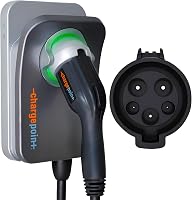
ChargePoint HomeFlex: for app-based home charging
Choose HomeFlex if you want app controls and a permanent installation. Its reminders and smart-home connections suit drivers who want to manage charging alongside other connected devices.
ChargePoint describes this model as UL-certified for indoor or outdoor installation by an electrician. It also includes a cold-resistant cable.
Skip it if you need a plug-in connection. If connected features drive your choice, check Wi-Fi coverage at the mounting point because certain functions and troubleshooting steps require it.
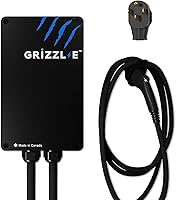
Grizzl-E Classic: for an existing outlet setup
Choose the Classic if your electrician approves a NEMA 14-50 outlet and you prefer a straightforward plug-in setup. Its selectable output lets the installation use an appropriate setting rather than assuming maximum power.
Grizzl-E describes the Classic as UL-certified, with a metal enclosure and a 24-foot cable. Its 40A setting requires a suitable 50A circuit.
Skip it if your plan calls for hardwiring or output above its maximum. Ask the electrician to confirm the current setting during setup, especially if the circuit supports less than full output.
Grizzl-E Ultimate: for hardwiring with offline charging
Choose this Grizzl-E if you want connected controls with charging that also works offline. It suits a permanent installation where Wi-Fi monitoring is useful but internet access may be interrupted.
Grizzl-E describes this model as UL-certified and Energy Star certified. Its app supports schedules and energy monitoring, and the package includes a mounting bracket and hardwire kit.
Skip it if you need a plug-in charger. If you need advanced OCPP integration, account for the separate activation fee before choosing this model for that purpose.
IYILO: for native NACS charging
Choose IYILO if your vehicle has NACS and you want scheduling or RFID access control. It avoids adding a connector adapter for a vehicle with the matching port.
IYILO describes ETL certification and separately mentions a UL 2594 report. Verify the exact certification record rather than treating that report as proof of UL certification.
Full 48A output requires hardwiring, a 60A breaker, and a licensed electrician. The app requires 2.4GHz Wi-Fi, so check your network before relying on its connected functions.
Skip it if your J1772 vehicle needs a direct connection without an adapter. Dynamic load balancing requires the separate Energy Meter, so don't assume the charger alone provides that feature.
How should you plan the circuit and cable route?
Set the mounting position and charging output before installation day. Park as you normally do, then measure the route from the proposed charger position to the vehicle's charge port.
Allow enough cable for a relaxed connection without stretching it across a walkway. Check both parking directions if you sometimes reverse into the space.
Ask the electrician to assess panel capacity, wiring, circuit protection, and local permit requirements. Our guide to EV charger breaker size helps you prepare those questions.
Don't choose a breaker from the charger's maximum output alone or raise a current setting to speed up charging. The setting must suit the whole installation.
If the cable won't reach, change the mounting plan rather than adding a household extension cord. Read why EV charger extension cords need special caution before planning around one.
How do you care for a certified home charger?
Keep the cable supported, the connector clean, and the equipment free of visible damage. Certification doesn't remove the need to notice wear or changes during everyday use.
Store the cable in loose loops using the intended holder. Keep it away from tires, door edges, and places where people could trip over it.
Follow the manufacturer's cleaning instructions and avoid directing pressurized water at the equipment. Inspect the connector and cable periodically for cracks, damaged contacts, or discoloration.
Stop using the charger if you notice a burning smell, melting, repeated faults, or damage. Have the equipment and installation assessed before resuming charging.
For scheduled charging, choose one main schedule in either the car or charger first. Overlapping schedules can leave a shorter charging window than you intended.
Which UL Listed EV charger should you choose?
Pick the connection and controls that fit your home, then verify certification for the exact model. Choose HomeFlex for app-based management, the Classic for an approved plug-in setup, or the hardwired Grizzl-E for connected features with offline charging.
Choose IYILO for native NACS and its access controls after confirming its ETL record. A UL Listed EV charger search shouldn't exclude a suitable ETL-certified option simply because the logo differs.
Before ordering, settle the connector, cable route, current setting, and installation plan. Use whether you can install an EV charger yourself to clarify the work involved, then visit the EV charger safety and installation hub for the next planning steps.
Frequently asked questions
Is ETL as safe as UL for an EV charger?
ETL Listed certification can serve the same safety certification purpose as UL Listed when it covers the relevant standard and intended use; Intertek issues the ETL mark. Check the exact model and certification record, then confirm that your electrician and local authority accept it for your planned installation.
Does UL Listed mean an EV charger is safe to install anywhere?
No, UL Listed certification covers a product under defined conditions, not every possible installation; your wiring, circuit capacity, mounting location, and exposure to weather still matter. Follow the manufacturer's instructions and have an electrician confirm that the charger and installation meet local requirements before you use it.
What is the difference between UL Listed and UL Certified?
UL Listed is a specific certification designation, while UL Certified is broader wording whose meaning depends on the actual mark and program. Check the mark on the charger and match its model to UL's certification record; marketing wording alone doesn't establish which standard or intended use the certification covers.
Should I buy an EV charger with both UL and ETL marks?
You generally don't need both marks when the exact charger has appropriate certification from a recognized laboratory. Focus on the standard covered, your vehicle's connector, and the installation requirements; if a permit or utility program specifies certification criteria, confirm that the exact model meets those criteria before ordering.