Can You Charge an EV From a NEMA 14-50 Outlet?
Yes, a NEMA 14-50 EV charger can charge your car from a suitable 240V outlet on a correctly installed, dedicated circuit. Have an electrician confirm the receptacle, wiring, breaker, and permitted charging current before use.
On this page (8 sections)
- What does a NEMA 14-50 outlet do for EV charging?
- Can you use any 14-50 outlet for an EV charger?
- Which NEMA 14-50 EV charger fits your routine?
- What should you measure before buying?
- How should you set up and use a plug-in charger?
- How do you care for the cable, plug, and outlet?
- Should you choose a plug-in or hardwired charger?
- Which NEMA 14-50 EV charger should you choose?
Yes, a NEMA 14-50 EV charger can charge your car at home when its plug matches a suitable 240V receptacle and dedicated circuit. The key buying decision is whether your electrical setup, vehicle connector, and parking layout suit a plug-in charger.
An existing outlet can make plug-in charging practical, but its shape doesn't prove it's ready for a sustained charging load. Start with an electrician's circuit check, then choose the controls and cable reach you'll use.
What does a NEMA 14-50 outlet do for EV charging?
A NEMA 14-50 outlet provides 240V power to a compatible Level 2 charger. The charger controls the power supplied to the vehicle, while the car's onboard equipment determines how much it can accept.
The “50” describes the receptacle's amperage rating, not the current you should select for charging. Many plug-in models deliver up to 40A because EV charging places a continuous load on the circuit.
More output helps only when your car can accept it and your driving needs justify it. A lower permitted setting may replenish your daily driving during an overnight parking window.
If you're still choosing between charging types, start with our guide to home EV charging options.
Can you use any 14-50 outlet for an EV charger?
No, the circuit and receptacle must suit sustained EV charging and the charger's instructions. An outlet previously used for an RV or range needs the same checks as any other existing installation.
Ask an electrician to verify:
- Receptacle condition: a secure fit with no damage, discoloration, or loose mounting.
- Wiring and breaker: suitable for the intended charging current.
- Dedicated circuit: configured as required by the equipment and local rules.
- Panel capacity: enough capacity for charging alongside other household loads.
- Location and protection: suitable mounting, weather protection, and circuit protection for the installation.
Don't use an adapter to force a charger into a different household receptacle. A similar-looking dryer outlet may have different wiring and circuit requirements.
For the relationship between charging current and circuit size, read what size breaker a Level 2 EV charger needs. Choose the setting only after the electrician confirms the whole circuit.
Which NEMA 14-50 EV charger fits your routine?
Choose ChargePoint for connected controls, Grizzl-E Classic for a simpler routine, Classic Connect for monitoring with offline charging, or EVIQO for app scheduling and cable reach. First confirm that each model's connection requirements fit your home and car.
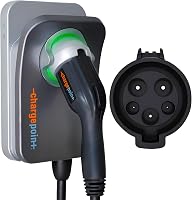
ChargePoint HomeFlex: a NEMA 14-50 EV charger for connected homes
The ChargePoint HomeFlex suits drivers who want charging controls, reminders, and charging information in one app. It also supports connections to smart home devices, making it useful if phone-based control is part of your routine.
This plug-in version delivers up to 40A and requires a suitable 40A or 50A circuit, with output set to match. Don't confuse the HomeFlex family's higher hardwired output with what this NEMA 14-50 connection supports.
Its 23 ft cold-resistant cable is worth considering for an unheated garage. ChargePoint identifies the unit as UL-certified and suitable for indoor or outdoor installation by an electrician.
Skip it if you want a basic charger and won't use the connected features. Its J1772 connector also needs a compatible adapter for a Tesla.
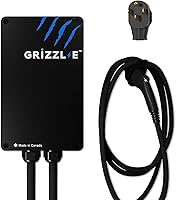
Grizzl-E Classic: for drivers who want fewer controls
The Grizzl-E Classic suits drivers who mainly want to plug in and charge. Its metal enclosure and cable intended for normal and cold weather make it a candidate for an unheated charging space.
Its current settings are 16A, 24A, 32A, and 40A. Grizzl-E pairs those with 20A, 30A, 40A, and 50A breakers respectively, subject to a suitable installation.
Choose it if you can handle scheduling through your vehicle or don't need charging records. Grizzl-E identifies it as UL-certified and includes ground-fault and over-temperature protection.
Skip it if charger-side Wi-Fi monitoring and energy statistics are priorities. The Classic Connect below is the closer match for that routine.
Grizzl-E Classic Connect: for monitoring without an always-online connection
The Classic Connect suits drivers who want energy records and schedules while retaining charging without an online connection. Its Wi-Fi software provides real-time monitoring, energy statistics, updates, and diagnostics.
Grizzl-E combines a 25 ft cable with a metal enclosure for indoor or outdoor use. It backs this model with a 3-year warranty and identifies it as UL-certified.
Its adjustable output follows the same current-to-breaker steps described for the Classic. That flexibility helps only when an electrician approves the matching circuit and setting.
Skip it if you won't use monitoring or schedules. Premium OCPP capability carries a one-time activation fee, so distinguish that optional feature from the charging functions you need.
EVIQO: for scheduled charging across a garage
The EVIQO suits drivers who want app-based scheduling and a 25 ft cable for their parking layout. Its app supports remote start and stop, reminders, and energy-use tracking.
EVIQO specifies a dedicated 50A circuit for this plug-in model. The app requires 2.4 GHz Wi-Fi, so check coverage at the proposed mounting spot before choosing it for remote control.
The glow-in-the-dark holster helps you find the connector dock at night. EVIQO also includes a side reset button and backs the charger with a 3-year manufacturer warranty.
Skip it if your circuit doesn't meet its installation requirements. Its adjustable app setting isn't a reason to assume that any existing outlet is suitable.
What should you measure before buying?
Measure the usable cable route from the charger to your car's charge port, with the car parked normally. Allow slack for handling the connector, and account for shelves, garage doors, and walking paths.
Don't measure only the straight-line distance across the garage. A cable that must pass around the vehicle or follow a wall needs more reach, and it shouldn't hang under tension.
Check the vehicle-side connector separately from the wall plug.
NEMA 14-50 describes the household connection; J1772 and NACS describe vehicle connections, as our J1772 vs. NACS guide explains.
For outdoor use, check both the charger's permitted location and the outlet's protection. A weather-resistant charger enclosure doesn't protect a poorly located receptacle.
How should you set up and use a plug-in charger?
Have the circuit checked, charger mounted, and output configured before the first charging session. Follow the installation manual for mounting height, clearances, connection order, and settings.
Plan the setup in this order:
- Park where you normally charge and confirm the cable route.
- Have the electrician approve the circuit and receptacle location.
- Mount the unit so its weight doesn't pull on the outlet.
- Set the permitted charging current according to the instructions.
- Connect any required app and confirm charging starts as expected.
Use one scheduling system at first, either the car or charger. Conflicting schedules can leave the car waiting when you expect it to charge.
Schedule around your utility's actual rate plan. Overnight charging saves money only when your plan offers a cheaper period at that time.
How do you care for the cable, plug, and outlet?
Keep the connector docked and the cable loosely stored off the driving path. Avoid tight bends, closed doors pressing on the cable, and pulling the connector out by its cord.
Check accessible parts for cracks, bent contacts, damaged insulation, or discoloration. Follow the manual's cleaning directions, and avoid spraying water into connectors or the receptacle.
Stop charging for a burning smell, crackling, unusual heat, or repeated breaker trips. Have the installation inspected before reuse instead of repeatedly resetting the breaker or charger.
Don't solve a reach problem with an extension cord. Our guide to using an extension cord with an EV charger explains why the outlet location and charging cable need to work together.
Should you choose a plug-in or hardwired charger?
Choose plug-in charging when a suitable outlet and its location already meet your needs. Consider hardwiring when you're adding a circuit, want a permanent connection, or need output beyond a plug-in model's limit.
A removable charger can be useful, but frequent unplugging shouldn't become your daily routine. Any second charging location also needs its own suitable circuit and receptacle.
Ask for both installation options before committing to a new outlet. Our hardwired vs. plug-in comparison explains the tradeoffs, while our installation cost guide covers what can affect the work.
Which NEMA 14-50 EV charger should you choose?
Choose the charger that fits your approved circuit and daily routine, then use cable reach and controls to narrow the choice.
- ChargePoint HomeFlex: choose it for app controls, reminders, and smart home connections.
- Grizzl-E Classic: choose it for a simpler charging routine without a need for charger-side energy records.
- Grizzl-E Classic Connect: choose it for monitoring, schedules, and charging that works without an online connection.
- EVIQO: choose it for scheduled charging, a long cable, and an easy-to-find connector dock.
If the outlet fails inspection or sits beyond practical cable reach, settle the installation plan before buying a NEMA 14-50 EV charger. Once that is clear, compare the best plug-in Level 2 EV chargers against your parking layout and preferred controls.
Frequently asked questions
Can I plug an EV charger into a NEMA 14-50 outlet?
Yes, if the charger has a matching plug and the outlet is on a suitable, dedicated circuit. Have an electrician verify the receptacle, wiring, breaker, panel capacity, and charging current before use, especially when the outlet was originally installed for a range or RV.
Is a NEMA 14-50 outlet the same as a dryer outlet?
No, a NEMA 14-50 outlet is not interchangeable with common dryer outlets; it is a four-prong receptacle used for some ranges and RV connections, while dryer receptacles can have different plug patterns and circuit requirements. Match the receptacle label and charger instructions instead of judging by appearance.
What breaker does a NEMA 14-50 EV charger need?
A charger drawing 40A continuously generally needs a 50A circuit, but the correct breaker also depends on the equipment instructions and installation; adjustable chargers may permit lower output on suitable circuits. Have an electrician check the wiring, receptacle, breaker, and allowed current setting together before charging.
Can I install a NEMA 14-50 outlet for EV charging myself?
Use a licensed electrician to install a new EV charging outlet; the work involves panel capacity, conductor sizing, grounding, circuit protection, permits, and local requirements. You can plan the parking position and cable route first, then have the electrician confirm the location and configure the charger for the completed circuit.