5 Best Outdoor EV Chargers (October 2026)
The best outdoor Level 2 EV chargers include the Grizzl-E Classic 40A NEMA 14-50 Charger for simple driveway charging, the EVIQO 48A Hardwired J1772 Charger for busy daily drivers, and the EVIQO 40A NEMA 14-50 J1772 Charger for app-controlled plug-in charging.
On this page (10 sections)
- Which outdoor Level 2 EV chargers suit different setups?
- The best Level 2 EV chargers for outdoor parking
- What should you check before choosing an outdoor EV charger?
- How much weather protection does an outdoor charger need?
- Is hardwiring worth it for an outdoor parking space?
- Which smart features are useful outside?
- How do you install an EV charger outdoors safely?
- How should you use and care for an outdoor charger?
- What mistakes cause problems with outdoor charging?
- Which outdoor Level 2 EV charger should you choose?
The Grizzl-E Classic 40A NEMA 14-50 Charger is the best Level 2 EV charger for outdoor use for most homes with a suitable outlet. Choose EVIQO for phone controls, or consider a hardwired model when your driving needs and electrical capacity justify more output.
The right choice starts with your parking spot. A weather-resistant case matters, but so do the electrical connection, cable route and amount of energy you need before your next trip.
Start with our home EV charger guide to compare charger types. If you’re deciding between a receptacle and a direct electrical connection, read hardwired vs plug-in EV chargers.
Our picks at a glance
-
1
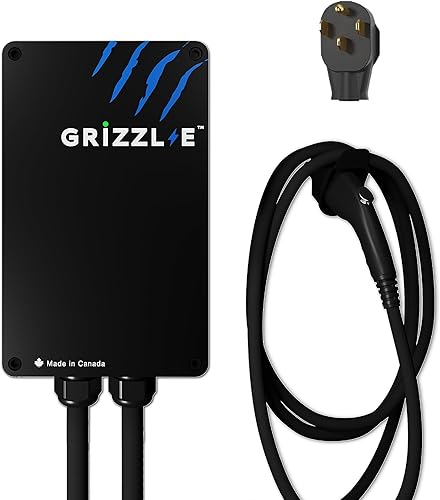 Best for simple driveway charging
Grizzl-E Classic 40A NEMA 14-50 Charger
9.1/10 our score
See it on Amazon -
2

-
3
 Best for app-controlled plug-in charging
EVIQO 40A NEMA 14-50 J1772 Charger
8.3/10 our score
See it on Amazon
- 4
 Check it
Grizzl-E Classic Connect 40A Charger
Best for unreliable home internet - 5
 Check it
Grizzl-E Ultimate 48A Hardwired Charger
Best for multi-charger households
Which outdoor Level 2 EV chargers suit different setups?
The Grizzl-E Classic suits a simple plug-in setup, while the EVIQO models add phone controls in either connection style. Classic Connect adds offline charging alongside connected tools, and Grizzl-E Ultimate serves households planning power sharing across chargers.
We compared enclosure protection, installation needs, cable reach and charging controls. A feature earns its place here when it solves a driveway problem, such as reaching a rear charge port or finishing a session within an overnight window.
Grizzl-E Classic 40A NEMA 14-50 Charger: Best for simple driveway charging
- IP67 water-resistant enclosure
- Metal case
- 16A, 24A, 32A or 40A output
- 24 ft cable
- NEMA 14-50 plug
Choose this for a straightforward outdoor plug-in setup with adjustable output. Its metal enclosure suits buyers who put weather protection ahead of phone controls.
Pros
- IP67 water-resistant metal enclosure
- 4 output settings for suitable circuits
- Built-in GFCI and power outage recovery
Cons
- Needs a suitable outdoor NEMA 14-50 installation
- Shortest cable among these picks
EVIQO 48A Hardwired J1772 Charger: Best for busy daily drivers
- IP66 / NEMA 4 housing
- 48A on a dedicated 60A circuit
- 25 ft J1772 cable
- App schedules and energy tracking
- Hardwired installation
A fit for drivers who need more overnight charging capacity and want app controls in a permanent installation. Confirm that your car and electrical service can use the extra output.
Pros
- App controls with adjustable charging speed
- Glow-in-the-dark connector holster
- EVIQO provides a 3-year warranty
Cons
- Requires professional hardwired installation
- App features require 2.4 GHz Wi-Fi
EVIQO 40A NEMA 14-50 J1772 Charger: Best for app-controlled plug-in charging
- IP66 / NEMA 4 housing
- Up to 40A
- 25 ft J1772 cable
- App schedules and energy tracking
- NEMA 14-50 plug
Choose this when a suitable outlet is already in the right place and you want phone controls. Its app can schedule charging and track energy use.
Pros
- App controls and off-peak scheduling
- Glow-in-the-dark connector holster
- EVIQO provides a 3-year warranty
Cons
- Full output needs a dedicated 50A circuit
- Connected features require 2.4 GHz Wi-Fi
Grizzl-E Classic Connect 40A Charger: Best for unreliable home internet
- NEMA 4X metal enclosure
- Adjustable 16A to 40A output
- 25 ft J1772 cable
- Wi-Fi schedules and monitoring
- Charging works offline
This combines a metal enclosure with connected charging tools and offline charging operation. It suits buyers who want monitoring without depending on a constant internet connection to charge.
Pros
- Charging works with or without an online connection
- Adjustable output for suitable circuits
- Grizzl-E provides a 3-year warranty
Cons
- Premium OCPP capability has a one-time activation fee
- Requires a suitable NEMA 14-50 installation
Grizzl-E Ultimate 48A Hardwired Charger: Best for multi-charger households
- UL Type 4 cast aluminum enclosure
- Up to 48A
- 25 ft J1772 cable
- Hardwired installation
- Power balancing across multiple chargers
Choose this for a planned hardwired installation that needs power balancing across multiple chargers. Wi-Fi adds schedules and monitoring, while charging also works offline.
Pros
- Automatic power balancing with equal or priority sharing
- Charging works without an online connection
- Mounting bracket and hardwire kit included
Cons
- Requires hardwired installation
- Premium OCPP capability has a one-time activation fee
| Product | Best for | Output | Enclosure | Connection | Our score |
|---|---|---|---|---|---|
| Grizzl-E Classic 40A NEMA 14-50 Charger | simple driveway charging | Up to 40A | Metal case; IP67 | NEMA 14-50 plug | 9.1 |
| EVIQO 48A Hardwired J1772 Charger | busy daily drivers | 48A on a 60A circuit; optional 50A on a 70A circuit | IP66 / NEMA 4 | Hardwired; J1772 | 8.4 |
| EVIQO 40A NEMA 14-50 J1772 Charger | app-controlled plug-in charging | Up to 40A | IP66 / NEMA 4 | NEMA 14-50 plug; J1772 | 8.3 |
| Grizzl-E Classic Connect 40A Charger | unreliable home internet | Up to 40A | NEMA 4X metal | NEMA 14-50 plug; J1772 | 7.9 |
| Grizzl-E Ultimate 48A Hardwired Charger | multi-charger households | Up to 48A | UL Type 4 rated aluminum | Hardwired; J1772 | 7.8 |
The best Level 2 EV chargers for outdoor parking
Choose the charger that fits your electrical connection and daily routine first. The differences below explain who benefits from each model and when another pick makes more sense.
Grizzl-E Classic 40A NEMA 14-50 Charger: Best for simple driveway charging
- IP67 water-resistant enclosure
- Metal case
- 16A, 24A, 32A or 40A output
- 24 ft cable
- NEMA 14-50 plug
Choose this for a straightforward outdoor plug-in setup with adjustable output. Its metal enclosure suits buyers who put weather protection ahead of phone controls.
Pros
- IP67 water-resistant metal enclosure
- 4 output settings for suitable circuits
- Built-in GFCI and power outage recovery
Cons
- Needs a suitable outdoor NEMA 14-50 installation
- Shortest cable among these picks
Grizzl-E Classic: best outdoor Level 2 charger for simple use
The Grizzl-E Classic suits a household that wants to park, connect and charge without making phone controls part of the routine. Its IP67 water-resistant metal enclosure makes it the lead choice for a straightforward outdoor station.
Output can be set to 16A, 24A, 32A or 40A to match a suitable circuit. That flexibility matters when your electrical setup supports less than the maximum, provided the installer configures the charger correctly.
The 24 ft cable needs a careful reach check before you choose the mounting spot. It is only slightly shorter than the others, but that difference can matter when the cable must pass around a bumper.
Grizzl-E includes built-in GFCI, over-temperature protection and power outage recovery. Those features support the charging equipment; the outdoor receptacle and wiring still need their own proper installation.
Buy it for simple daily charging with a suitable NEMA 14-50 outlet. Skip it if charger-based scheduling or remote energy tracking is central to your plan, and compare the connected options below.
EVIQO 48A Hardwired J1772 Charger: Best for busy daily drivers
- IP66 / NEMA 4 housing
- 48A on a dedicated 60A circuit
- 25 ft J1772 cable
- App schedules and energy tracking
- Hardwired installation
A fit for drivers who need more overnight charging capacity and want app controls in a permanent installation. Confirm that your car and electrical service can use the extra output.
Pros
- App controls with adjustable charging speed
- Glow-in-the-dark connector holster
- EVIQO provides a 3-year warranty
Cons
- Requires professional hardwired installation
- App features require 2.4 GHz Wi-Fi
EVIQO hardwired: for demanding overnight charging
The EVIQO hardwired model suits drivers who cover substantial daily miles and want app controls in a permanent outdoor installation. Its IP66 / NEMA 4 housing and 25 ft J1772 cable support driveway placement.
It supplies 48A on a dedicated 60A circuit. An optional 50A setting requires a dedicated 70A circuit, so have the electrician confirm both the configuration and your vehicle’s AC charging limit before planning around it.
The app provides start and stop controls, schedules, reminders and energy tracking through 2.4 GHz Wi-Fi. A glow-in-the-dark holster helps you find the connector’s storage point after an evening arrival.
EVIQO provides a 3-year warranty and a side reset button. The button offers a convenient restart when appropriate, but repeated faults need attention rather than repeated resets.
Choose it for higher charging demand and a planned professional installation. Skip it if your car cannot accept the extra current or a lower-output charger already replenishes your daily use within the available time.
EVIQO 40A NEMA 14-50 J1772 Charger: Best for app-controlled plug-in charging
- IP66 / NEMA 4 housing
- Up to 40A
- 25 ft J1772 cable
- App schedules and energy tracking
- NEMA 14-50 plug
Choose this when a suitable outlet is already in the right place and you want phone controls. Its app can schedule charging and track energy use.
Pros
- App controls and off-peak scheduling
- Glow-in-the-dark connector holster
- EVIQO provides a 3-year warranty
Cons
- Full output needs a dedicated 50A circuit
- Connected features require 2.4 GHz Wi-Fi
EVIQO plug-in: for schedules without hardwiring
The EVIQO plug-in model suits buyers with a suitable outdoor outlet who want scheduled charging and energy records. It delivers up to 40A on a dedicated 50A circuit through a NEMA 14-50 connection.
Its app adjusts charging speed from 6A to 40A, starts or stops sessions and tracks energy use. Off-peak scheduling is useful when your utility plan charges different rates by time of day.
The IP66 / NEMA 4 housing protects the charger enclosure, while the 25 ft J1772 cable gives you room to plan the route. Check the outdoor outlet separately, including whether its cover accommodates the connected plug.
A glow-in-the-dark holster provides a visible docking spot, and EVIQO backs the unit with a 3-year warranty. Check for usable 2.4 GHz Wi-Fi where the charger will sit before relying on connected features.
Buy it for an outlet-based smart setup. Skip it if reaching that outlet requires a poor cable route, or if a new installation makes hardwiring the better fit.
Grizzl-E Classic Connect 40A Charger: Best for unreliable home internet
- NEMA 4X metal enclosure
- Adjustable 16A to 40A output
- 25 ft J1772 cable
- Wi-Fi schedules and monitoring
- Charging works offline
This combines a metal enclosure with connected charging tools and offline charging operation. It suits buyers who want monitoring without depending on a constant internet connection to charge.
Pros
- Charging works with or without an online connection
- Adjustable output for suitable circuits
- Grizzl-E provides a 3-year warranty
Cons
- Premium OCPP capability has a one-time activation fee
- Requires a suitable NEMA 14-50 installation
Grizzl-E Classic Connect: for connected tools and offline charging
The Grizzl-E Classic Connect suits buyers who want schedules and energy statistics while keeping charging available without an online connection. That distinction matters when home internet is unreliable or the driveway sits near the edge of coverage.
Its NEMA 4X metal enclosure pairs with a NEMA 14-50 plug and 25 ft J1772 cable. Adjustable output offers several circuit-matching options, which your installer should configure for the actual electrical setup.
Grizzl-E Connect provides real-time monitoring, charging schedules and diagnostics. Grizzl-E also supplies an EasyEvPlug holster and backs the charger with a 3-year warranty.
Premium OCPP capability carries a one-time activation fee. OCPP is a communication standard used with charging-management systems, so confirm that you need a specific integration before paying for it.
Choose it for connected features with offline operation. Skip it if your vehicle already handles all the scheduling you need and you have no use for charger energy records; the simpler Classic may cover your routine.
Grizzl-E Ultimate 48A Hardwired Charger: Best for multi-charger households
- UL Type 4 cast aluminum enclosure
- Up to 48A
- 25 ft J1772 cable
- Hardwired installation
- Power balancing across multiple chargers
Choose this for a planned hardwired installation that needs power balancing across multiple chargers. Wi-Fi adds schedules and monitoring, while charging also works offline.
Pros
- Automatic power balancing with equal or priority sharing
- Charging works without an online connection
- Mounting bracket and hardwire kit included
Cons
- Requires hardwired installation
- Premium OCPP capability has a one-time activation fee
Grizzl-E Ultimate: for a planned multi-charger setup
The Grizzl-E Ultimate suits households planning more than one charging station and wanting automatic power balancing. It supports equal sharing or priority charging, which gives the installer options for a household with different daily driving needs.
This hardwire-only model supplies up to 48A and has a UL Type 4 rated cast aluminum enclosure. The included 25 ft J1772 cable, mounting bracket and hardwire kit form part of a permanent installation.
Wi-Fi adds schedules, monitoring, energy statistics and diagnostics, while charging works without an online connection. An external antenna supports connectivity, but the mounting location still needs usable network coverage for connected tools.
Power sharing needs a properly designed installation. Have the electrician confirm compatible equipment, setup requirements and the available electrical capacity before treating it as the solution for a second vehicle.
Buy it when power sharing solves a real household need. Skip it for a single-car setup that does not need those controls, and account for the separate activation fee if you require premium OCPP capability.
To compare vehicle port types, read J1772 vs NACS.
What should you check before choosing an outdoor EV charger?
Check vehicle compatibility, circuit capacity and cable reach before comparing convenience features. A charger that misses any of those requirements is the wrong choice even if its enclosure suits the weather.
Match the connector to your exact vehicle
Check the charge port on your specific car rather than relying on its brand. Port designs can differ between vehicles from the same manufacturer.
The EVIQO models, Classic Connect and the Grizzl-E Ultimate version here use J1772 connectors. For a different vehicle port, confirm the correct AC charging adapter and its permitted use with the vehicle manufacturer.
Decide how much overnight energy you need
Choose output around your daily driving and charging window. A larger maximum does not make charging faster when the car’s onboard AC charger accepts less.
For planning, 40 miles of daily driving at 3 miles per kWh uses about 13 kWh before charging losses. Use your own car’s typical efficiency and allow extra time for losses and seasonal changes.
Divide the energy you need by the hours available at home to estimate the average charging power required. This helps you avoid paying for electrical capacity that your routine will rarely use.
A long commute and a short off-peak window make higher output more useful. A plug-in hybrid or a car parked overnight for many hours may need far less.
Confirm the circuit before selecting a current setting
Have an electrician check the panel, wiring and connection together. The number on a breaker alone does not establish that an old outdoor outlet is ready for sustained EV charging.
Read what size breaker a Level 2 EV charger needs before comparing amperage. For the cost side, see our Level 2 EV charger installation cost guide.
Do not raise an app setting simply because the charger allows it. The permitted output must stay within the installation’s configured limit.
Measure the usable cable path
Measure along the route the cable will follow, rather than drawing a straight line from wall to charge port. Include bends around the car and enough slack to handle the connector comfortably.
Try your normal parking position and any realistic alternative. Backing into the space may improve reach, but the setup should not depend on parking within a few inches of one exact spot.
A second EV may have its port on the opposite side. If that is a likely future change, discuss a central mounting point before electrical work begins.
How much weather protection does an outdoor charger need?
Choose an outdoor enclosure that suits the site, then protect every separate electrical connection as required. The charger’s enclosure classification does not extend to a wall receptacle, adapter or vehicle port.
IP and NEMA classifications describe different protection conditions. An IP67 label is not a universal step above every NEMA 4 enclosure, so avoid choosing by the largest number.
Follow the charger’s mounting and exposure instructions. A sheltered wall can reduce direct rain and sun, but shelter does not make indoor-only equipment suitable for outdoor use.
Check the stated operating temperature range in the installation manual for your climate. Water protection alone does not confirm suitability for extreme heat or cold.
Avoid low spots where runoff or snowmelt collects. Keep the charging equipment clear of sprinkler spray, stored garden tools and places where a car could strike it.
For coastal homes or sites exposed to deicing salt, ask about corrosion protection and care requirements. An outdoor-use claim does not remove the need to assess those conditions.
See our guide to UL and ETL safety marks on EV chargers for what certification labels mean. Electrical safety certification and enclosure protection answer different questions, so check both.
Is hardwiring worth it for an outdoor parking space?
Hardwiring is worth considering for a permanent outdoor station, especially when you are installing a new circuit anyway. It removes the separate plug-and-receptacle connection from the installation.
A plug-in model makes sense when a suitable receptacle is already positioned well. It also allows removal without disconnecting fixed wiring, though another location still needs an appropriate electrical setup.
Do not assume an existing RV or range-style outlet is ready just because the plug fits. Ask the electrician to check its condition, wiring, circuit and outdoor protection for sustained charging use.
With a new installation, compare complete quotes for both approaches. Include cable routing, mounting, permits where required and any changes needed at the panel.
Hardwiring can also avoid forcing the charger beside an inconvenient outlet. A better mounting spot may be worth more in daily use than retaining a plug-in connection.
Which smart features are useful outside?
Scheduling and energy tracking are the smart features most likely to help a household routine. Remote controls are useful too, but only if the connection reaches the parking space.
If your electricity plan has off-peak hours, compare that window with when you need to leave. A schedule that starts late may need more charging power than a session spread across the whole night.
Use one device as the main schedule controller, either the car or the charger. Conflicting schedules can leave the vehicle waiting even though everything appears connected correctly.
Check network coverage with your phone near the proposed mount. A strong signal inside the house does not confirm good reception beyond an exterior wall.
Energy tracking can help you understand charging use, but estimated cost depends on the rate entered. Plans with time-based charges need more care than a single flat electricity rate.
Do not assume offline charging means remote controls and statistics work without internet. Those are separate functions, and you should confirm how saved schedules behave before depending on them.
How do you install an EV charger outdoors safely?
Have a licensed electrician plan the complete installation around the charger instructions and local requirements. Give them the exact model, desired parking position and your usual overnight charging window.
Walk through the cable route with the car parked in place. Identify the charge port, connector storage point and any door, gate or walkway that the cable could obstruct.
Choose a mount that can support the unit and withstand normal cable handling. If there is no suitable wall, discuss a proper post or pedestal rather than improvising an attachment to a fence.
For a receptacle installation, ask how the plug, outlet and cover will remain protected while connected. The cover needs to suit actual use with the charger plug in place.
Keep the supply cord and charging cable free from strain. Neither should carry the charger’s weight or be pinched behind a gate or door.
Ask the installer to show you the permitted current setting, normal indicators and shutoff procedure. Keep the manual and circuit information somewhere accessible for later service.
If you’re considering doing the work yourself, read whether you can install an EV charger yourself and follow local rules.
How should you use and care for an outdoor charger?
Store the connector in its holster and inspect the cable regularly. Keeping the equipment off the ground reduces exposure to dirt, standing water and accidental damage.
After charging, return the cable in loose loops without sharp bends. Keep enough clearance that the loops do not drag where tires, lawn equipment or snow-clearing tools can catch them.
Look for cuts, crushed sections, loose mounting hardware or changes in the plug’s fit. Stop using the equipment if you notice scorching, melted material, a burning smell or repeated fault alerts.
Clean the enclosure and connector exterior only as the manual permits. Do not aim a pressure washer at the equipment or push objects into the electrical contacts.
In freezing weather, check for ice before handling the connector. Do not force a frozen latch or use hot water to free it; follow the vehicle and charger instructions.
After a power outage, check charging status and your departure target. Recovery behavior can vary, and a resumed session may still have lost several hours of charging time.
What mistakes cause problems with outdoor charging?
The most common planning mistakes are poor cable routing, unsuitable connections and unnecessary output upgrades. Address those before focusing on app features or the enclosure material.
- Buying before measuring. A long cable can still fall short when it has to wrap around the vehicle.
- Using a dryer outlet as a substitute. A different receptacle needs a proper electrical assessment, not an improvised connection.
- Solving short reach with an extension cord. Move the charger or revise the installation instead; our EV charger extension cord guide explains the concerns.
- Choosing maximum amperage by default. Check the car’s limit and daily energy need before planning a larger circuit.
- Leaving the connector on the driveway. Use the holster so the contacts stay clear of grit and pooled water.
- Ignoring repeated faults. A reset can restart equipment, but it does not correct damaged wiring, a worn receptacle or another recurring problem.
Avoid unplugging a plug-in charger after every session unless its instructions call for it. Routine vehicle disconnection happens at the car, and repeated removal adds handling to the supply connection.
Which outdoor Level 2 EV charger should you choose?
Choose the best Level 2 EV charger for outdoor use by matching it to your existing connection, energy needs and parking layout. Use these decision rules after the electrical and reach checks are complete.
- Choose Grizzl-E Classic for straightforward plug-in charging when you do not need charger-based phone controls.
- Choose EVIQO hardwired for a permanent station when your car and overnight routine can benefit from higher output.
- Choose EVIQO plug-in when a suitable outlet is in the right place and you want schedules and energy tracking.
- Choose Classic Connect when you want connected tools with charging that can operate without an online connection.
- Choose Grizzl-E Ultimate when a professionally planned multi-charger setup will use its power-balancing features.
If two models meet the same needs, favor the one that gives you the cleaner cable route and simpler daily routine. Convenient connector storage and easy reach matter every time you arrive home.
For a wider comparison, see the best Level 2 EV chargers for home. If you have settled on an outlet-based installation, compare the best Level 2 chargers for a NEMA 14-50 outlet.
Our top 3 picks at a glance
-
1
Best for simple driveway charging
Grizzl-E Classic 40A NEMA 14-50 Charger
9.1/10 our score
See it on Amazon -
2
-
3
Best for app-controlled plug-in charging
EVIQO 40A NEMA 14-50 J1772 Charger
8.3/10 our score
See it on Amazon
Frequently asked questions
Can a Level 2 EV charger be installed outdoors?
Yes, choose a charger intended for outdoor use and have the complete installation matched to its instructions and local requirements. The enclosure is only one part of the setup; the electrical connection, mounting point and cable route also need to suit the location and its exposure.
What enclosure rating should an outdoor EV charger have?
Choose an enclosure approved for the exposure at your parking spot, rather than picking the largest number; IP and NEMA classifications describe different kinds of protection and are not direct substitutes. Check the installation instructions for mounting limits, and remember that the charger enclosure does not protect a separate outlet.
Is a plug-in or hardwired outdoor EV charger better?
Hardwiring suits a permanent outdoor station, while plug-in charging makes sense when a suitable receptacle is already available; compare the whole installation, including connection protection and circuit capacity, before choosing. Our guide to hardwired vs plug-in EV chargers explains the tradeoffs for a home setup.
Can I leave an outdoor EV charger plugged in during rain?
Yes, when the charger instructions allow that use and the complete installation is suitable for the exposure; a water-resistant enclosure does not make an unprotected outlet safe in rain. Keep the connector docked between sessions, and stop using equipment with damage, water inside a connection or signs of overheating.
How long should the cable be for an outdoor charger?
Choose a cable that reaches the charge port along a safe route with enough slack to plug in without pulling; measure with the car parked normally, including bends around the vehicle. Leave room for small parking changes, and avoid any route that puts the cable under tires or across a walkway.