Can You Install an EV Charger Yourself?
You can install an EV charger yourself only for setup tasks its instructions and local rules allow, such as connecting an approved plug-in unit to a confirmed suitable outlet. Use a qualified electrician for new wiring or hardwiring, and follow any brand requirement for professional installation.
On this page (10 sections)
- Can I install an EV charger myself?
- What can you do before the electrician arrives?
- When should you hire an electrician?
- Which plug-in charger suits app-focused drivers?
- Who should choose a hardwired charger?
- Who should choose an adjustable plug-in charger?
- What should you check before using an existing outlet?
- Do you need a permit or inspection?
- How should you set up and care for the charger?
- How should you decide whether to install an EV charger yourself?
You can install an EV charger yourself only for setup tasks allowed by its instructions and local rules, such as connecting a plug-in unit to a confirmed suitable outlet. New wiring, panel changes, and hardwiring belong with a qualified electrician.
The useful distinction is between setting up charging equipment and installing its electrical supply. A charger with a plug can still require professional installation, and an existing receptacle isn't proof that your circuit can support hours of charging.
Can I install an EV charger myself?
Sometimes, for limited setup work on an approved existing circuit. You need to confirm the charger's requirements, the circuit's suitability, and any local or brand requirement for professional installation before connecting it.
A matching outlet is only the starting point. Its wiring, grounding, protection, condition, and available capacity also matter.
Hardwired equipment connects directly to the circuit instead of using a receptacle. Have an electrician make that connection and complete the required checks.
None of the 3 chargers below should be bought on the assumption that it avoids electrical work. ChargePoint requires a licensed electrician for HomeFlex installation, EVIQO requires professional hardwiring, and Grizzl-E still needs a suitable outlet and circuit.
What can you do before the electrician arrives?
Plan the charging location and gather the information that affects the installation. You can do this without opening a panel, removing an outlet cover, or changing wiring.
Start with your usual parking position. Measure the route from a possible charger location to the car's charging port, allowing slack without leaving cable across a walkway or under a tire.
Check the car's connector and maximum AC charging rate in its manual. A charger with more output than the car accepts won't make that car charge faster.
Photograph the proposed location and the outside of the panel for the electrician. Explain whether you park indoors or outdoors and whether another vehicle may need to reach the same charger later.
Can I install an EV charger myself to save money?
You can reduce wasted work through planning, but don't count on savings from doing electrical work yourself. A short, practical cable route and a sensible charging target can matter more than buying the highest-output unit.
Before requesting quotes, decide whether you need faster charging at all. Our guide to whether you need a Level 2 charger at home helps you compare your daily driving with the time available to recharge.
When should you hire an electrician?
Hire an electrician for a new outlet, circuit, panel change, or hardwired connection. Also get help when you can't confirm the condition or suitability of an existing circuit.
Ask for an assessment of panel capacity, not just a quote to add a breaker. An empty breaker space doesn't establish that the home can support the added load.
The charging current must suit the whole circuit. Our guide to EV charger breaker size explains why a breaker's number isn't the current you should automatically select in an app.
Request a quote that covers the circuit route, mounting, required protection, permits, inspection, and charger setup. Compare the same scope of work using our guide to EV charger installation cost.
Which plug-in charger suits app-focused drivers?
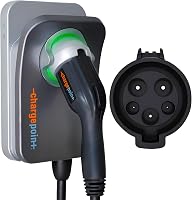
Choose ChargePoint HomeFlex if you want app controls and plan to use a licensed electrician. Its NEMA 14-50 plug doesn't remove ChargePoint's professional installation requirement.
This version has a J1772 vehicle connector and a 23-foot cable. Tesla drivers need a compatible adapter, so confirm the car-side connection before ordering.
The ChargePoint app provides charging information, reminders, and smart-home connections. That suits drivers who want charging details on their phone rather than relying only on the car's display.
ChargePoint specifies up to 40A for its plug-in versions. Have the installer configure the unit for the actual circuit rather than assuming every HomeFlex configuration supports the same output.
Skip it if your main goal is avoiding an installation appointment. If cable reach is tight, measure the full route to the charging port before choosing it.
Who should choose a hardwired charger?
Choose EVIQO if you want a fixed charging location with app scheduling and energy tracking. It suits a planned installation where an electrician can assess the panel and provide the required circuit.
The EVIQO provides up to 48A on a dedicated 60A, 240V circuit, with a 25-foot cable and J1772 connector. A Tesla connection requires a suitable adapter.
Its app lets you schedule sessions, adjust charging speed, and track energy use. Confirm that your home has a 2.4 GHz Wi-Fi network reaching the installation spot before counting on those controls.
EVIQO backs it with a 3-year manufacturer warranty and includes a glow-in-the-dark connector holster. Docking the connector there also keeps it off the driveway or garage floor.
Skip this model if you need to unplug the charger and take it between locations. Compare hardwired vs plug-in EV chargers before paying for an outlet that your chosen equipment won't use.
Who should choose an adjustable plug-in charger?
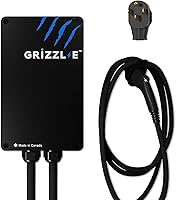
Choose Grizzl-E Classic Connect if you want a removable unit that can charge without an online connection. It suits drivers who value that flexibility and already have, or will install, a suitable receptacle.
This NEMA 14-50 model has a J1772 connector, a 25-foot cable, and a metal enclosure for indoor or outdoor use. It can be removed from its mounting bracket for transport.
Grizzl-E specifies 40A output on a 50A circuit, with lower settings for other supported circuit sizes. Those settings don't make an unknown outlet suitable; the installer still needs to confirm the complete setup.
Wi-Fi features include schedules, charging monitoring, and energy statistics. Advanced OCPP capability carries a separate activation fee, so check whether you need it before treating every connected feature as included.
Skip it if you want a hardwired connection. Moving it between homes also requires a suitable circuit at each destination, not just a matching receptacle.
What should you check before using an existing outlet?
Have the outlet and its circuit confirmed suitable for sustained EV charging. A receptacle previously used for another appliance doesn't automatically meet your charger's requirements.
Tell the electrician about any loose fit, discoloration, cracks, past overheating, or uncertain installation history. Don't plug into damaged equipment while waiting for advice.
Avoid power-plug adapters that turn a mismatched outlet into an apparent fit. A vehicle-side connector adapter serves a different purpose and doesn't correct problems with the household supply.
Keep extension cords out of the planned setup. If the charger won't reach, choose a better mounting position or circuit location; our guide to EV charger extension cords explains the concerns.
Do you need a permit or inspection?
Requirements depend on your local rules and the work involved. Contact your city or county building department before adding a circuit or changing electrical equipment.
Ask the electrician who will arrange the permit and inspection, and include that responsibility in the quote. Confirm any homeowner-work restrictions before assuming local rules allow you to do the job.
Keep the charger manual and installation records. They provide a useful reference if you replace the charger, change vehicles, or ask another electrician to assess the setup.
How should you set up and care for the charger?
Follow the manual for setup and keep the cable, connector, and power connection in good condition. Ask the installer to explain the approved current limit before you change user-accessible settings.
Choose one main charging schedule, either in the vehicle or the charger. Conflicting schedules can leave the car waiting for permission to charge when you expected a session to begin.
Store the cable in loose loops and dock the connector after use. Keep it clear of vehicle tires, sharp edges, and doors that could pinch it.
Before connecting, look for cable damage, debris in the connector, or changes at the outlet. Follow the manual's cleaning instructions, and don't open the enclosure for routine care.
If you notice unusual heat, a burnt smell, sparks, or repeated breaker trips, stop using the setup and have it checked. Don't repeatedly reset a breaker or raise charging limits to work around a problem.
How should you decide whether to install an EV charger yourself?
If you're asking “can I install an EV charger myself,” first separate setup from electrical installation. Handle only the tasks allowed by the manual and local rules, after the circuit has been confirmed suitable.
Pick ChargePoint for app-focused home charging with professional installation. Choose EVIQO for a fixed hardwired setup, or Grizzl-E for a removable plug-in unit that also charges offline.
For an existing receptacle, read whether you can charge an EV from a NEMA 14-50 outlet before ordering. For the wider equipment choice, see home EV chargers: Level 1, Level 2 and what to buy.
Frequently asked questions
Can I install a Level 2 EV charger myself?
You can handle permitted setup tasks, but a plug-in charger still needs a confirmed suitable outlet and circuit. Have a qualified electrician handle new wiring, panel changes, or hardwiring, and follow the charger brand's installation requirements; local rules may also require a permit and inspection.
Do I need an electrician for a plug-in EV charger?
You need an electrician if the charger brand requires one or the outlet and circuit need work or assessment. Plugging into an existing receptacle may be allowed when its suitability is confirmed, but the plug shape alone cannot establish circuit capacity, grounding, protection, or the condition of hidden wiring.
Can I hardwire an EV charger myself?
Use a qualified electrician to hardwire your EV charger and confirm any local licensing requirements. This work connects the unit directly to the electrical circuit, so the installer must assess panel capacity, size the circuit, follow the charger instructions, and arrange permits and inspection where required.
What should I check before installing a home EV charger?
Check your car's connector, charging limit, parking position, and usual daily driving needs before choosing equipment. Then confirm the charger's installation instructions, cable reach, and required circuit with an electrician, including whether the panel can support it and who will handle any required permit and inspection.