7 Best Hardwired EV Chargers (October 2026)
The best hardwired Level 2 EV chargers include the ChargePoint HomeFlex 50A Hardwired Charger for connected households, the EVIQO 48A Hardwired J1772 Charger for driveway charging, and the Emporia Pro 48A Hardwired Charger for capacity-limited homes.
On this page (8 sections)
- How we chose these hardwired Level 2 EV chargers
- Compare the best hardwired Level 2 EV chargers
- The best hardwired EV chargers by use
- What should you check before buying a hardwired EV charger?
- How should you plan a hardwired charger installation?
- How should you schedule and care for a home EV charger?
- Which hardwired charger mistakes should you avoid?
- Which best hardwired Level 2 EV charger fits your home?
The ChargePoint HomeFlex is our best hardwired Level 2 EV charger pick for connected households, with app reminders, smart home connections and a cold-resistant cable. Choose EVIQO NACS for a direct NACS connection or Emporia Pro when managing household electrical demand matters most.
The right charger must fit your car, parking space and electrical service. Paying for more output won't help if your vehicle can't accept it or your overnight charging window already covers your daily driving.
Start with our guide to home EV chargers and charging levels if you're choosing your first home setup.
Our picks at a glance
-
1
 Best for connected households
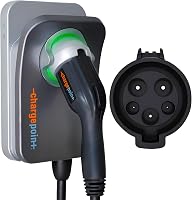
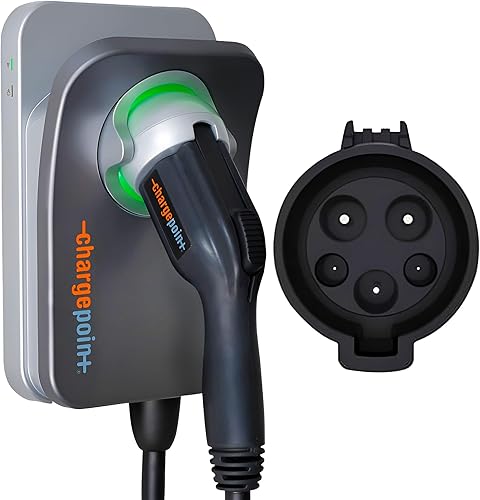
ChargePoint HomeFlex 50A Hardwired Charger
8.7/10 our score
See it on Amazon -
2

-
3

- 4
 Check it
Emporia 48A Hardwired J1772 Charger
Best for scheduled overnight charging - 5
 Check it
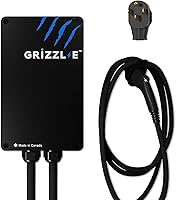
Grizzl-E Ultimate 48A Hardwired Charger
Best for unreliable internet - 6
 Check it
EVIQO 48A NACS Hardwired Charger
Best for NACS households - 7
 Check it
Wallbox Pulsar Plus 40A Charger
Best for existing outlet setups
How we chose these hardwired Level 2 EV chargers
We compared connector fit, charging controls, installation needs and daily convenience, with extra weight on features that solve a clear household problem. These include a direct vehicle connection, home load management, useful cable reach and charging without internet.
Scores reflect those features and suitability for a fixed home installation. Product order follows the scores, but a lower-ranked charger can be the better purchase when its connector or controls match your needs.
The final Wallbox model is a plug-in alternative. It stays in the comparison to help readers weighing both installation types, but it isn't a hardwired pick.
Compare the best hardwired Level 2 EV chargers
Choose by connector and household needs first, then compare output. Most hardwired models here offer similar maximum current, so their practical differences lie in energy management, app features and installation requirements.
| Product | Best for | Amperage | Connector | Installation | Our score |
|---|---|---|---|---|---|
| ChargePoint HomeFlex 50A Hardwired Charger | connected households | Up to 50A | J1772 | Hardwired | 8.7 |
| EVIQO 48A Hardwired J1772 Charger | driveway charging | 48A; optional 50A configuration | J1772 | Hardwired | 8.4 |
| Emporia Pro 48A Hardwired Charger | capacity-limited homes | Up to 48A | J1772 | Hardwired; included monitor also needs installation | 8.1 |
| Emporia 48A Hardwired J1772 Charger | scheduled overnight charging | Up to 48A | J1772 | Preconfigured for hardwiring with a whip | 8.0 |
| Grizzl-E Ultimate 48A Hardwired Charger | unreliable internet | Up to 48A | J1772 | Hardwired only | 7.8 |
| EVIQO 48A NACS Hardwired Charger | NACS households | 48A; optional 50A configuration | NACS | Hardwired | 7.7 |
| Wallbox Pulsar Plus 40A Charger | existing outlet setups | Up to 40A | J1772 | NEMA 14-50 plug-in | 7.5 |
A charger doesn't push its maximum power into every car. The vehicle, charger setting and approved circuit together determine the available charging rate.
The best hardwired EV chargers by use
HomeFlex leads for connected charging, while Emporia Pro addresses household demand and EVIQO offers a direct choice between connector types. Use the sections below to find the model that solves your specific problem.
ChargePoint HomeFlex: best hardwired Level 2 EV charger for connected homes
Choose HomeFlex if charging reminders and phone-based management will help you keep a regular routine. Its app brings home charging information and public charging station searches into the same place.
ChargePoint HomeFlex 50A Hardwired Charger: Best for connected households
- Adjustable 16–50A output
- J1772 connector
- App reminders and smart home connections
- Cold-resistant cable
Choose HomeFlex for charging reminders, phone controls and smart home connections. Its J1772 connector suits matching vehicles, while some app functions require Wi-Fi.
Pros
- Charging reminders and smart home connections
- Indoor or outdoor installation
- Cold-resistant cable
Cons
- Some functions require Wi-Fi
- NACS vehicles need a compatible adapter
HomeFlex offers adjustable output from 16–50A, a J1772 connector and a 23 ft cold-resistant cable. ChargePoint supports indoor or outdoor installation and identifies the charger as UL certified.
The useful distinction is its mix of reminders, charging controls and smart home connections. That suits a household where arrival times vary and a missed plug-in could disrupt the next morning.
ChargePoint also provides 24/7 support. Some functions and troubleshooting steps require Wi-Fi, so check coverage at the mounting spot before committing to app-dependent routines.
Skip this model if your main need is whole-home load management or a direct NACS connection. Those needs point more clearly toward Emporia Pro or EVIQO NACS than toward HomeFlex's higher place in the ranking.
Have the installer confirm the approved current for your circuit. The maximum setting is an option, not a requirement for useful overnight charging.
EVIQO J1772: for driveway charging and late arrivals
Choose EVIQO J1772 for outdoor parking where connector storage, weather protection and reaching the car matter. Its glow-in-the-dark holster makes the docking point easier to find after dark.
EVIQO 48A Hardwired J1772 Charger: Best for driveway charging
- 48A on a dedicated 60A circuit
- 25 ft J1772 cable
- App schedules and energy tracking
- IP66 / NEMA 4 housing
A sealed enclosure, long cable and glow-in-the-dark holster suit outdoor parking and late arrivals. App controls require a 2.4 GHz Wi-Fi network.
Pros
- IP66 / NEMA 4 housing
- Glow-in-the-dark connector holster
- Side reset button
Cons
- App requires 2.4 GHz Wi-Fi
- NACS vehicles need a compatible adapter
The charger combines a 25 ft cable with an IP66 / NEMA 4 housing. EVIQO specifies licensed installation and a dedicated 60A, 240V circuit for its standard 48A configuration.
App controls cover schedules, charging speed, reminders and energy use. They require 2.4 GHz Wi-Fi, so check that your home network reaches the driveway rather than relying on coverage inside the house.
A side reset button provides a restart option without opening the unit. EVIQO backs the charger with a 3-year manufacturer warranty and U.S.-based support.
EVIQO also describes a 50A configuration requiring a dedicated 70A circuit. Leave that decision and the internal switch settings to the installer; the small output increase rarely deserves priority over a sensible wiring plan.
Skip this version if your daily vehicle has NACS. Buying the matching EVIQO connector avoids adding an adapter to every charging session.
Emporia Pro: for homes with limited electrical headroom
Choose Emporia Pro when charging must work around other large household loads. The included Vue monitor and PowerSmart software make this a home energy management choice as well as an EV charger.
Emporia Pro 48A Hardwired Charger: Best for capacity-limited homes
- 48A hardwired J1772 charging
- Included Emporia Vue monitor
- PowerSmart household load management
- 25 ft cable
Emporia Pro pairs charging with household energy monitoring and PowerSmart load management. Have an electrician assess the complete system before counting on it to avoid a panel upgrade.
Pros
- Includes Vue home energy monitor
- Adjusts charging around household demand
- App schedules and real-time energy information
Cons
- Monitor adds installation work
- NACS vehicles need a compatible adapter
Emporia says PowerSmart adjusts charging around household electricity use to help avoid a panel upgrade. Have your electrician assess that possibility before treating it as a solution for your home.
A monitor doesn't create more electrical capacity. Its value is allowing charging to use available headroom while reducing demand when other equipment needs power.
The hardwired J1772 model supports up to 48A and includes a 25 ft cable, holster and mounting equipment. Its app adds charging schedules and real-time household energy information.
Ask for a quote covering both the charger and Vue installation, plus PowerSmart setup. The installer should explain how the system will operate when household demand is high.
Skip the Pro bundle if you only want scheduled overnight charging and your electrician confirms ample capacity. The standard Emporia below handles that simpler job without adding a home monitor to the installation.
Emporia standard: for a regular overnight schedule
Choose the standard Emporia if you want to plug in after work and charge during a planned overnight window. It suits drivers who want scheduling and energy information without making whole-home monitoring part of the project.
Emporia 48A Hardwired J1772 Charger: Best for scheduled overnight charging
- 48A hardwired output
- J1772 connector
- 2.4 GHz Wi-Fi scheduling
- 25 ft cable
Choose the standard Emporia for scheduled charging and energy data without the Pro bundle's included home monitor. It comes preconfigured for a permanent hardwired connection.
Pros
- App schedules and energy data
- Hardwire whip included
- Emporia provides a 3-year warranty
Cons
- App requires 2.4 GHz Wi-Fi
- Does not include the Pro bundle's Vue monitor
This model comes preconfigured for hardwiring with a whip and supports up to 48A. The J1772 connector and 25 ft cable suit a matching vehicle parked within a measured cable route.
Its app uses 2.4 GHz Wi-Fi for schedules and real-time energy data. Emporia identifies it as UL listed and Energy Star certified, and provides a 3-year warranty.
Schedule charging around your actual utility plan rather than assuming every overnight hour costs less. If your rate stays the same all day, the main benefit may be routine and usage tracking rather than bill savings.
Skip this model if your electrician identifies a need for managed household demand. Don't assume the standard charger includes the Pro bundle's Vue monitor and PowerSmart equipment.
It also isn't the direct-connector choice for a NACS car. Decide on the connector before comparing its app features with other models.
Grizzl-E: for charging with unreliable internet
Choose Grizzl-E when you want charging that can work without an online connection. Its cast aluminum enclosure also suits buyers who prefer a metal housing for a fixed garage or outdoor installation.
Grizzl-E Ultimate 48A Hardwired Charger: Best for unreliable internet
- 48A hardwired J1772 charging
- Cast aluminum enclosure
- 25 ft cable
- Charging works without internet
Grizzl-E suits a garage where internet access is unreliable and a metal enclosure matters. Online features add schedules, statistics and diagnostics, while charging can continue without an internet connection.
Pros
- Charging works offline
- Cast aluminum enclosure
- Equal or priority power sharing across chargers
Cons
- NACS vehicles need a compatible adapter
- Premium OCPP access has a separate activation fee
This hardwire-only model supports up to 48A through a 25 ft J1772 cable. Grizzl-E identifies it as UL certified and Energy Star certified, with a 3-year warranty.
Wi-Fi adds schedules, charging statistics, remote controls and diagnostics. An external antenna supports connectivity, but the clear reason to choose it here is the ability to charge offline.
It also offers equal or priority power sharing across multiple chargers. That's worth discussing for a 2-EV household where allocating available charging power matters more than giving each car the highest possible output.
Charger-to-charger sharing and whole-home load management solve different problems. Have the installer confirm the equipment and configuration needed for your plan.
Skip this model if you mainly want a direct NACS connection or have no use for its offline capability and metal case. Premium OCPP access also carries a separate activation fee, so confirm that you need it before adding that option.
EVIQO NACS: for a direct Tesla or NACS connection
Choose EVIQO NACS if it plugs directly into your daily vehicle. A matching connector matters more to daily convenience than a small difference in ranking or maximum output.
EVIQO 48A NACS Hardwired Charger: Best for NACS households
- 48A on a dedicated 60A circuit
- NACS connector with Tesla port button
- 25 ft cable
- App schedules and energy tracking
This EVIQO connects directly to Tesla vehicles and other EVs with NACS ports. Choose it over the J1772 version when it removes the need for a daily adapter.
Pros
- Direct NACS connection
- Tesla charge-port opening button
- IP66 / NEMA 4 housing
Cons
- NACS-to-J1772 adapter is not included
- App requires 2.4 GHz Wi-Fi
Its NACS handle includes a button to open a Tesla's charge port. The 25 ft cable gives placement flexibility, although your mounting plan still needs enough slack for the car's normal parking position.
Like the J1772 EVIQO, it uses a dedicated 60A circuit for standard 48A operation and requires professional installation. It also offers the optional higher-current configuration described above.
The sealed IP66 / NEMA 4 housing supports outdoor placement. App schedules, reminders, speed controls and energy tracking require a 2.4 GHz Wi-Fi network.
This is the clearer choice for a NACS-only household. In a mixed-car household, count how often a J1772 vehicle would need the charger before choosing a permanent connector.
Skip it if the main car uses J1772 and you have no reason to favor NACS. A compatible NACS-to-J1772 adapter isn't included, and adding one creates another item to handle and store.
Wallbox Pulsar Plus 40A: for keeping an existing outlet
Choose this Wallbox plug-in model only if you're reconsidering hardwiring and already have a suitable NEMA 14-50 installation. It doesn't meet a requirement for a hardwired charger.
Wallbox Pulsar Plus 40A Charger: Best for existing outlet setups
- 40A NEMA 14-50 plug-in model
- J1772 connector
- Wi-Fi and Bluetooth controls
- 25 ft cable
This Wallbox is an alternative for a suitable existing outlet, not a hardwired recommendation. It offers phone controls through Wi-Fi and Bluetooth in a compact housing.
Pros
- Wi-Fi and Bluetooth controls
- Compact housing
- Wallbox supports indoor or outdoor use
Cons
- This exact model is plug-in, not hardwired
- Adapter for Tesla vehicles is not included
The 40A J1772 model offers Wi-Fi and Bluetooth controls, a 25 ft cable and a compact housing measuring 3.9 x 7.8 x 7.9 inches. Wallbox supports indoor or outdoor use and provides a 3-year manufacturer warranty.
Bluetooth gives it a different connection option from chargers that rely on Wi-Fi for app access. Confirm which controls you need nearby and which you expect to use remotely.
Wallbox separates this plug-in configuration from its 48A hardwired version. Don't buy this exact model expecting the other version's installation format or output.
Have an electrician assess an existing outlet before using it for regular EV charging. A matching socket shape alone doesn't confirm that the circuit and receptacle suit sustained use.
Skip it if your project already calls for permanent wiring. For an outlet-based plan, compare our best plug-in EV chargers for a NEMA 14-50 outlet.
What should you check before buying a hardwired EV charger?
Confirm vehicle compatibility, daily energy needs, panel capacity and cable routing before ordering. These checks prevent a feature-rich charger from becoming an awkward or unsuitable installation.
Match the connector to the actual vehicle
Choose the plug that fits your car's AC charging port directly. Check the vehicle manual rather than relying on brand or model year alone.
For a shared charger, consider both cars and which one charges most often. Our guide to NACS and J1772 adapters explains when an adapter may help.
An adapter must suit AC charging, the vehicle and the intended current. A public fast-charging adapter isn't automatically suitable for a home AC charger.
Size charging around your overnight window
Choose enough power to replace a normal day's driving during the hours you're parked. A short charging window needs more output than the same energy spread across a full night.
As a planning example, replacing 24 kWh over 8 hours needs an average of 3 kW before charging losses. At a nominal 240V, even 24A provides about 5.8 kW before losses.
Check your car's maximum AC charging power as well. A larger charger won't bypass that limit, and plug-in hybrids may have much lower charging needs than long-range EVs.
Use our guide to Level 2 EV charger amperage to compare output with your parking routine. Treat maximum current as a capacity option rather than a target every household needs.
Check household capacity, not just empty breaker spaces
Ask an electrician to assess the home's electrical service and expected demand. Empty spaces in a panel don't prove that the service can support another large load.
Request options at more than one charging current if capacity is tight. A lower setting, managed charging or a different mounting location may change the scope of the work.
Our guide to EV charger breaker size explains the difference between charging current and circuit size. The installer must follow the exact model's instructions and applicable local requirements.
Measure the cable route with the car parked
Measure around obstacles from the planned charger location to the charge port. Leave slack so the connector doesn't carry cable tension and you don't need to park within inches of one exact spot.
Check normal and occasional parking positions, including backing in. A long cable won't solve a route blocked by a closed garage door, storage shelves or a walkway.
Position the holster where you can dock the handle without bending or stepping around the car. For outdoor use, keep the connector clear of standing water and likely vehicle impact.
How should you plan a hardwired charger installation?
Get a written installation plan before buying, especially if the panel is distant or capacity is uncertain. A clear scope makes charger choices easier and helps you compare electrical quotes fairly.
Give the electrician the full charging plan
Share your vehicle's AC charging limit, parking position, daily driving needs and preferred charging window. Include plans for a second EV if that is a realistic near-term need.
Ask the quote to cover the circuit, wiring route, mounting, permits, inspection and any monitor or networking work. Our Level 2 EV charger installation cost guide explains the parts of a project that affect the total.
Decide whether future capacity is worth installing now. Preparing a wiring route for later needs can make sense, but it doesn't require operating today's charger at maximum output.
Check the network before mounting
Check Wi-Fi coverage at the proposed charger location, including with the garage door closed. Confirm the required network band rather than assuming every smart charger supports your current setup.
Ask how initial setup, charging and remote controls behave if internet access drops. Only Grizzl-E's offline charging capability is confirmed here; don't assume every app-connected model behaves the same way.
Confirm the handover settings
Have the installer record the approved charging current and explain any load management settings. Keep that information with the manual so a later app reset doesn't leave you guessing.
During handover, confirm that the car begins charging and that the selected schedule works as intended. Review connector storage, stop controls and the correct response to an error indication.
How should you schedule and care for a home EV charger?
Use one clear charging schedule and store the cable after each session. Most daily problems are easier to avoid when the car and charger aren't following conflicting instructions.
Choose either the vehicle or charger as the main scheduler. If both have active schedules, charging may wait until their allowed windows overlap.
Check your utility's actual off-peak hours, including seasonal or weekend differences. Ensure the window leaves enough time for your expected energy needs, and know how to request an earlier charge after an unusually long trip.
Follow the vehicle maker's routine charge-limit guidance. You don't need to refill the battery to its maximum every night simply because the charger has enough power.
Inspect the cable and handle periodically for cuts, crushed sections or debris. Store the cable in loose loops, keep it out of tire paths and follow the manual's cleaning instructions.
Stop using equipment with visible damage, scorching or unusual heat, and contact the installer or manufacturer. Repeated breaker trips need investigation rather than repeated resets.
Which hardwired charger mistakes should you avoid?
Avoid buying by maximum amperage alone or treating all versions of a charger as interchangeable. Connector, installation format and included equipment can change the purchase more than the brand name.
- Ordering the wrong version. Confirm hardwired versus plug-in and J1772 versus NACS before checkout; this matters especially for the Wallbox alternative.
- Assuming load management is included. The standard Emporia and Pro bundle don't include the same equipment.
- Stretching the cable across traffic. Moving the mounting point can be more useful than choosing a larger electrical circuit.
- Using an extension cord to fix reach. Plan the charger location around the supplied cable instead.
- Expecting a full battery every morning regardless of use. Starting charge, battery size, temperature and available charging time affect the result.
- Changing installer limits in an app. A higher setting doesn't upgrade the wiring or create spare service capacity.
If you're unsure you need this much charging power, read whether you need a Level 2 charger at home. Your daily driving and parking window should lead the decision.
Which best hardwired Level 2 EV charger fits your home?
Choose the charger that removes your main constraint. For a straightforward J1772 installation with useful connected features, HomeFlex remains our first choice.
Pick EVIQO J1772 for driveway use and convenient connector storage, or EVIQO NACS when it matches your car directly. Choose Emporia Pro when your electrician recommends household load management, and standard Emporia when scheduled charging is enough.
Grizzl-E is the stronger fit when offline charging and a metal enclosure matter. Keep the Wallbox 40A option only if you're choosing an outlet-based setup.
Before ordering, confirm the exact connector, approved output and mounting location with your installer. If the connection type is still undecided, use our hardwired vs plug-in EV charger guide to settle that choice first.
Our top 3 picks at a glance
-
1
Best for connected households
ChargePoint HomeFlex 50A Hardwired Charger
8.7/10 our score
See it on Amazon -
2
-
3
Frequently asked questions
What is the best hardwired Level 2 EV charger?
ChargePoint HomeFlex is our top pick for connected households because it combines charging reminders, smart home connections and indoor or outdoor installation. Choose EVIQO NACS instead if it matches your vehicle directly, or Emporia Pro if household load management is your main concern; confirm installation feasibility before ordering.
Is a hardwired EV charger faster than a plug-in charger?
A hardwired charger can be faster when its output, the circuit and your vehicle all support the extra power. A vehicle with a lower AC charging limit won't gain speed from a higher charger setting; compare charging power and your overnight parking window rather than choosing by connection type alone.
Do hardwired EV chargers need an electrician?
Use a licensed electrician for a hardwired EV charger installation. The work includes checking household capacity, planning a suitable circuit and wiring route, and setting the charger to an approved current; ask who handles permits and inspection, and keep the final settings and installation records with your charger manual.
Should I choose J1772 or NACS?
Choose the connector that matches your vehicle's AC charging port so daily charging doesn't require an adapter. Check the vehicle manual rather than assuming all cars from one brand use the same port; for a mixed-car household, confirm a suitable AC adapter and its current limit before choosing one connector.
Can a hardwired EV charger go outdoors?
Yes, a hardwired charger designed for outdoor use can be installed outside with suitable wiring and mounting. Outdoor suitability applies to the complete installation, including cable entries and connector storage; choose a spot clear of standing water and vehicle impact, and follow the charger's instructions for exposure and placement.