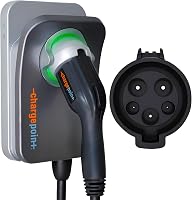
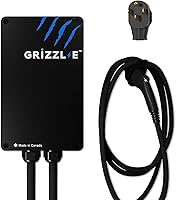
5 Best Tesla Wall Connector Alternatives (October 2026)
The best Tesla Wall Connector alternatives include the EVIQO 48A NACS Hardwired Charger for connected home charging, the EVIQO 40A NACS Plug-In Charger for scheduled plug-in charging, and the IYILO 48A NACS Level 2 Charger for two-EV households.
On this page (9 sections)
- How we chose the best alternative to Tesla Wall Connector
- Best Tesla Wall Connector alternatives by setup
- How much charging power do you actually need?
- Should you keep an outlet or choose hardwiring?
- How to check connector fit and cable reach before ordering
- Which smart features are worth paying attention to?
- How to set up and care for your home charger
- Common mistakes when replacing a home NACS charger
- Which Tesla Wall Connector alternative should you choose?
The EVIQO 48A NACS Hardwired Charger is the best alternative to Tesla Wall Connector here for a permanent home installation with app controls. Choose its plug-in counterpart when you already have a suitable outlet, or consider IYILO when planning charging for two EVs.
All five picks use native NACS connectors. Start with your vehicle's port and electrical capacity, then compare the features that will change your daily routine.
Our J1772 vs NACS guide explains connector fit, while our home EV charger guide covers the wider charger choice.
Our picks at a glance
-
1

-
2
 Best for scheduled plug-in charging
EVIQO 40A NACS Plug-In Charger
7.6/10 our score
See it on Amazon -
3

- 4
 Check it
Lectron NACS 40A Plug-In Level 2 Charger
Best for outdoor outlet setups - 5
 Check it
Lectron NACS 48A Hardwired Charger
Best for permanent driveway charging
How we chose the best alternative to Tesla Wall Connector
We prioritized connector fit, installation needs and useful controls over maximum output alone. A charger earns its place by matching a real home setup, including the circuit, parking position and overnight charging window.
We compared the supplied specifications and features. EVIQO leads for its combination of app controls and cable reach; IYILO serves a more specific need with power sharing and optional whole-home load management.
The Lectron models remain worth considering when their installation format fits your parking space. Their lower position reflects fewer confirmed control features in this comparison, rather than a claim about long-term reliability.
These are alternatives for home NACS charging, not promises of matching every Tesla Wall Connector function. If you need a particular utility integration or multi-charger arrangement, confirm that exact use before ordering.
| Product | Best for | Output | Installation | Cable | Our score |
|---|---|---|---|---|---|
| EVIQO 48A NACS Hardwired Charger | connected home charging | 48A on a 60A circuit; optional 50A on a 70A circuit | Hardwired; dedicated 240V circuit | 25 ft | 7.7 |
| EVIQO 40A NACS Plug-In Charger | scheduled plug-in charging | Up to 40A | NEMA 14-50 outlet on a dedicated 50A circuit | 25 ft | 7.6 |
| IYILO 48A NACS Level 2 Charger | two-EV households | Up to 48A | Hardwired; 60A breaker and licensed electrician required | 25 ft | 7.4 |
| Lectron NACS 40A Plug-In Level 2 Charger | outdoor outlet setups | Up to 40A | NEMA 14-50 outlet | 23 ft | 7.2 |
| Lectron NACS 48A Hardwired Charger | permanent driveway charging | Up to 48A | Hardwired; professional installation required | 23 ft | 7.0 |
Best Tesla Wall Connector alternatives by setup
Choose EVIQO for app-managed charging, IYILO for a planned two-charger system, or Lectron for a parking space that suits its cable and installation type. The right circuit matters more than a small difference in maximum charging current.
EVIQO 48A NACS Hardwired Charger: Best for connected home charging
- 48A on a 60A circuit
- Hardwired installation
- 25 ft cable
- App controls
Choose this permanent NACS charger for app schedules, energy tracking and flexible placement. Have an electrician confirm panel capacity before committing to the installation.
Pros
- NACS connector with Tesla charge-port button
- App supports schedules and current adjustment
- Glow-in-the-dark connector holster
Cons
- Requires professional hardwired installation
- J1772 adapter is not included
EVIQO: best Tesla Wall Connector alternative for app control
The EVIQO hardwired model suits homeowners who want to schedule charging and check energy use from their phone. Its native NACS connector includes a Tesla charge-port button, and the 25 ft cable gives you room to place the unit around garage doors or storage.
The app starts and stops sessions, adjusts current from 6A to 48A, sends reminders and tracks energy use and cost. It needs 2.4 GHz WiFi, so check coverage at the planned mounting spot before installation day.
For its standard maximum output, the charger needs a dedicated 60A, 240V circuit. EVIQO also supports a 50A configuration on a dedicated 70A circuit, but have the electrician handle that setting and confirm that your vehicle can benefit.
EVIQO gives the housing IP66 and NEMA 4 protection designations and states UL, ETL and Energy Star certifications. The brand backs the charger with a 3-year warranty.
The glowing holster helps you find the connector after dark, and a side reset button allows a restart without opening the enclosure. Skip this model if you want to use an existing outlet or don't need its connected features.
EVIQO 40A NACS Plug-In Charger: Best for scheduled plug-in charging
- Up to 40A
- NEMA 14-50 plug
- 25 ft cable
- App controls
A useful match for an existing suitable outlet when you want charging schedules and energy tracking. Its native NACS connector connects directly to NACS-equipped vehicles.
Pros
- No hardwiring when a suitable outlet is available
- App supports schedules and current adjustment
- Tesla charge-port button on connector
Cons
- Requires a dedicated 50A circuit and NEMA 14-50 outlet
- J1772 adapter is not included
The EVIQO plug-in model is the strongest choice here for an outlet-equipped garage where scheduling and energy tracking matter. It uses a four-prong, 240V NEMA 14-50 outlet on a dedicated 50A circuit.
Its maximum output is 40A, with app adjustment from 6A upward. That can suit an overnight routine without paying for a different installation solely to gain more current.
You get a 25 ft cable, a Tesla charge-port button and a glow-in-the-dark holster. Those details help when the outlet isn't beside the car's port or you usually connect after sunset.
The app needs a 2.4 GHz network and supports reminders, remote start and stop, and charging schedules. EVIQO rates the housing IP66 and NEMA 4, states UL, ETL and Energy Star certifications, and provides a 3-year warranty.
Choose it when an electrician has confirmed that your outlet is ready for sustained EV charging. Skip it if you need hardwiring or are assuming that a dryer outlet will work; our NEMA 14-50 EV charger guide explains the connection.
IYILO 48A NACS Level 2 Charger: Best for two-EV households
- Up to 48A
- Hardwired installation
- Power sharing
- App controls
Consider IYILO when you need an installer to plan charging for two vehicles. It supports power sharing, while whole-home dynamic load balancing needs a separate energy meter.
Pros
- Current adjusts in 1A steps
- Power sharing supports two compatible chargers
- App displays connector temperature
Cons
- Requires professional hardwired installation
- Dynamic load balancing requires a separate energy meter
IYILO makes the most sense for a household planning two compatible chargers on one circuit. Its power-sharing support gives your installer another way to serve two parking spaces without treating each charger as an unrelated installation.
Power sharing and dynamic load balancing solve different problems. The former divides available charging capacity between chargers; IYILO's dynamic load balancing responds to household demand and requires the separate energy meter.
The hardwired unit reaches 48A, requires a 60A breaker at that output, and allows current changes in 1A steps from 6A. A licensed electrician should plan the circuit and any shared configuration.
Its app supports schedules, time-of-use rates, energy tracking and multiple user accounts over 2.4 GHz WiFi. The NACS cable is 25 ft long, and J1772 use requires a compatible adapter sold separately.
IYILO's connector sensor displays temperature in the app, with power reduction or shutdown above 221°F. The brand states ETL and Energy Star certifications and provides a 3-year warranty.
Choose it for a defined power-management need. Skip it if you're expecting the charger alone to provide whole-home load balancing without the meter and installation planning.
Lectron NACS 40A Plug-In Level 2 Charger: Best for outdoor outlet setups
- Up to 40A
- NEMA 14-50 plug
- 23 ft cable
- IP66 enclosure
A plug-in choice for an outdoor parking space with a suitable outlet and a manageable cable route. Check reach before choosing its shorter cable over the EVIQO plug-in model.
Pros
- Lectron states ETL certification to UL charging safety standards
- IP66 enclosure for indoor or outdoor use
- Lectron provides a 3-year limited warranty
Cons
- Requires a suitable NEMA 14-50 outlet and circuit
- Less cable reach than the EVIQO and IYILO options
The Lectron plug-in model suits a fixed parking space with a suitable outlet, especially when you're comparing outdoor mounting options. Its IP66 enclosure supports indoor or outdoor use, and an included holster gives the connector a place to rest.
It delivers up to 40A at 240V through a NEMA 14-50 connection. The 23 ft cable needs careful measurement if the outlet sits near the garage entrance and your vehicle's port faces the opposite wall.
Lectron states ETL certification to UL 2594, UL 2251 and UL 2231 charging safety standards. It also provides protection against overheating, overcurrent, voltage faults and ground faults, plus a 3-year limited warranty.
Choose this model when its cable route fits and you don't require the confirmed app features of the EVIQO plug-in option. If scheduling will come from your car, check that the vehicle supports the schedule you want before buying.
Skip it when you need more reach or a confirmed charger-side energy dashboard. Our plug-in EV charger roundup covers more choices for an outlet-based installation.
Lectron NACS 48A Hardwired Charger: Best for permanent driveway charging
- Up to 48A
- Hardwired installation
- 23 ft cable
- IP66 enclosure
A hardwired option for a fixed parking space where the cable reaches without crossing a walkway. Choose EVIQO or IYILO instead when their app or power-management features solve a specific need.
Pros
- Lectron states ETL certification to UL charging safety standards
- IP66 enclosure for indoor or outdoor use
- Lectron provides a 3-year limited warranty
Cons
- Requires professional hardwired installation
- Less cable reach than the EVIQO and IYILO options
The Lectron hardwired model fits a permanent parking space where outlet access isn't part of the plan. Its 23 ft cable and included holster suit a mounting position close enough to keep the cable away from doors and walkways.
It provides up to 48A at 240V and requires professional installation on a dedicated circuit. Have the installer confirm the circuit requirements and current configuration rather than treating the advertised maximum as an automatic setting.
Lectron rates the enclosure IP66 for indoor or outdoor use. The brand states ETL certification to UL 2594, UL 2251 and UL 2231 standards and backs the unit with a 3-year limited warranty.
This is a reasonable choice when you want a permanent NACS connection and its features cover your needs. Choose EVIQO for confirmed app scheduling and energy tracking, or IYILO when power sharing is central to your plan.
Skip this version if you want a plug-in connection. Our hardwired EV charger roundup covers more permanent options, while the installation cost guide explains the work that can shape your project.
How much charging power do you actually need?
Choose output around the energy you use each day and the hours you park, rather than the largest number on the box. The vehicle's onboard AC charger also limits how much power it can accept.
For scale, a 240V charger supplying 32A provides about 7.7 kW. Over 8 hours, that's roughly 61 kWh before charging losses, although the vehicle may draw less or stop when it reaches its limit.
Use your car's recent energy-use records to estimate what a normal day consumes. A driver replacing a modest daily commute has a different need from someone arriving nearly empty and leaving again a few hours later.
At the same voltage, moving from 40A to 48A raises the available power by 20%. It won't cut charging time in half, and it won't help when the car already accepts less than either charger can supply.
A narrow off-peak window can make higher output useful. A long overnight parking window can make a lower setting entirely practical, especially if it avoids unnecessary electrical work.
Treat miles added per hour as an estimate because vehicle efficiency, weather and charging losses vary. Our EV charger amperage guide helps connect current settings with your charging routine.
Should you keep an outlet or choose hardwiring?
Keep a suitable existing outlet when it serves your parking space and an electrician confirms its condition and circuit capacity. Choose hardwiring for a permanent installation when you're adding a circuit or want one of the hardwired models above.
A matching plug shape doesn't prove that an outlet is suitable for hours of charging. The receptacle, wiring, breaker, grounding and installation conditions all need to support the planned load.
EV charging is a sustained electrical load, so the charger's output cannot simply equal the breaker's number. The EVIQO plug-in pairing above illustrates this distinction: charging current and circuit capacity are different figures.
Adjustable current also doesn't turn an unsuitable circuit into a suitable one. Have the installer establish the allowed setting, then keep app adjustments within that limit.
If you're renting, agree on the mounting location and electrical work with the property owner before ordering. A plug-in unit still needs secure mounting, a safe cable route and a suitable circuit.
For a new outdoor installation, ask the electrician to compare both approaches at the actual location. Weather protection for the charger doesn't remove the need for a properly installed outlet, cover and supply connection.
How to check connector fit and cable reach before ordering
Check the actual port on your vehicle, then measure the route the charging cable will follow. Model names alone aren't enough when port types can differ across versions.
These chargers connect directly to native NACS ports. EVIQO and IYILO also support J1772 vehicles with a compatible NACS-to-J1772 adapter, which isn't included.
Confirm adapter support with Lectron before choosing either model for a J1772 car. Adapter direction matters: an adapter intended to connect a J1772 supply to a NACS car performs a different job.
Don't assume that an adapter for public DC fast charging works with home AC charging. Match the adapter to the charger, vehicle and charging method, and follow the equipment instructions.
For reach, park exactly where you normally stop and measure from the proposed charger position to the port. Follow the path around corners and obstacles, allowing slack at both ends.
Check a second parking position if someone else uses the space or you sometimes reverse in. A cable that reaches only when you park against a wall can become a daily nuisance.
Avoid routes that cross stairs, sidewalks or a closing garage door. Fix the mounting plan before buying rather than expecting an extension cord to solve a short cable.
Which smart features are worth paying attention to?
Prioritize scheduling, usable energy records and a connection that reaches your garage. Extra controls help only when they solve something your car or routine doesn't already handle.
A vehicle's own charging schedule may be enough if your only goal is overnight charging. Charger-side scheduling is more useful when you want a consistent routine across vehicles or prefer managing sessions separately from the car.
Use one primary schedule at first. If the car waits for one time window while the charger permits another, you can plug in correctly and still miss the intended session.
Check your electricity plan before entering off-peak hours. Scheduling reduces cost only when those hours have a lower applicable rate, and the window must leave enough time to replace your daily use.
Energy-cost estimates depend on the rate you enter and what the app includes. Use them to track patterns; compare them with your bill before treating them as a complete household cost.
For IYILO, decide whether you need power sharing, whole-home load balancing, or both. Neither feature means two vehicles will each receive the full circuit capacity at the same time.
Don't assume rebate eligibility from a brand's utility-program support. Our home EV charger rebate guide explains why the exact model, program rules and installation requirements need checking before you buy.
How to set up and care for your home charger
Start regular use only after the circuit and charger settings are confirmed. Then build a simple routine that protects the connector and makes missed charging sessions easy to catch.
Before the installer leaves, ask where the circuit is labeled and what maximum current has been configured. Also confirm cable storage, any required app setup and the steps to follow after an error.
Set your usual departure time and desired battery limit according to your vehicle's guidance. Choose charging hours that leave some margin for a late arrival or an unusually heavy driving day.
Check the first few scheduled sessions to confirm that charging starts and finishes as expected. A reminder can help you notice a forgotten plug, but it doesn't replace checking the car's charge status before a long trip.
Return the connector to its holster when you're done. Keep it off the driveway, avoid driving over the cable and store the cable in broad loops without sharp bends.
Inspect the cable and connector for cuts, cracks, damaged pins or discoloration. Stop use and seek help if you notice a burning smell, melted material, repeated breaker trips or an unusual change in heat.
Follow the manufacturer's cleaning instructions and avoid sprays into electrical contacts. Outdoor protection doesn't make a charger suitable for immersion or a pressure washer aimed at its connector.
A reset button can clear some temporary faults, but repeated faults need attention. Don't keep restarting a charger that shows physical damage or recurring electrical errors.
Common mistakes when replacing a home NACS charger
The biggest mistake is buying before confirming the electrical and parking plan. A charger can fit your vehicle perfectly and still be wrong for the circuit or mounting location.
- Choosing by maximum amps alone. Compare your car's AC acceptance rate and parking hours before paying for more circuit capacity.
- Assuming every four-prong outlet works. Identify the receptacle and have its circuit assessed rather than relying on appearance.
- Measuring in a straight line. Include the route around the car, walls and storage, plus enough slack to handle the connector.
- Treating weather protection as complete site protection. The supply connection, mounting and cable storage still need to suit the location.
- Buying an adapter by connector shape alone. Confirm its direction, AC charging purpose and compatibility with both pieces of equipment.
- Expecting load management without accessories. IYILO's separate meter is part of a dynamic load-balancing plan.
- Replacing a working charger without diagnosing the problem. A circuit fault, weak WiFi or conflicting schedules may persist after you change the unit.
If you're replacing equipment already mounted on the wall, give the electrician the old installation details and the new charger's instructions. Existing wiring doesn't establish compatibility with a replacement unit's terminals, mounting or configuration.
Which Tesla Wall Connector alternative should you choose?
The best alternative to Tesla Wall Connector is the one that meets your charging window on a circuit your home can support. Choose the installation format first, then the controls and cable layout.
Pick the EVIQO hardwired model for a permanent setup with app-managed charging. Choose the EVIQO plug-in model when a suitable outlet already exists and you want the same kind of scheduling and energy records.
Choose IYILO when two-vehicle charging or optional whole-home load management is part of an installer-designed plan. Consider the Lectron models when their cable reaches comfortably and you don't require the other picks' confirmed connected features.
Before ordering, settle three things: port fit, circuit approval and cable route. If your daily driving may not justify a new installation yet, read whether you need a Level 2 charger at home.
Our top 3 picks at a glance
-
1
-
2
Best for scheduled plug-in charging
EVIQO 40A NACS Plug-In Charger
7.6/10 our score
See it on Amazon -
3
Frequently asked questions
What should I check before choosing a Tesla Wall Connector alternative?
Check your EV's charge port, available electrical capacity and parking layout first. Then choose between a plug-in and hardwired installation.
Have a licensed electrician confirm the circuit and permitted current setting, and measure the cable route to your charge port with the car parked normally.
Can a NACS charger charge a J1772 vehicle?
The EVIQO and IYILO chargers support J1772 vehicles with a compatible NACS-to-J1772 adapter, sold separately. Confirm adapter support with Lectron before choosing either Lectron model for a J1772 vehicle.
Our NACS to J1772 adapter guide explains direction, compatibility and the checks to make before charging.
Is a plug-in NACS charger easier to install?
A plug-in charger is simpler to connect when a suitable NEMA 14-50 outlet and circuit already exist. Adding or correcting that circuit still requires electrical work, so the plug alone doesn't establish that your garage is ready.
Read our NEMA 14-50 EV charging guide before relying on an existing outlet.
Do I need an electrician for a hardwired EV charger?
Yes, the hardwired EVIQO, IYILO and Lectron models here require professional installation. Have a licensed electrician check panel capacity, circuit sizing, cable routing and the charger's current configuration before use.
See our hardwired vs plug-in charger guide to decide which installation method fits your home.