Level 1 vs Level 2 EV Chargers: Which Do You Need? (October 2026)
The Level 1 vs Level 2 charger choice comes down to how much energy you need between drives. Choose Level 1 for light driving and long parking windows; choose Level 2 for quicker recovery on a suitable 240V circuit.
On this page (9 sections)
- Level 1 vs Level 2 charger: what is the difference?
- Which charging level fits your driving routine?
- Which of these chargers should you buy?
- How should you compare real charging speed?
- What outlet and electrical setup do you need?
- How should you set up and care for the charger?
- Which common mistakes should you avoid?
- Does connector compatibility change the choice?
- Level 1 vs Level 2 charger: make the final choice
Choose Level 1 for light daily driving and long parking windows, or Level 2 for faster replenishment between trips. The Level 1 vs Level 2 charger decision starts with your energy use, available charging hours and home circuit.
You usually need to replace the energy used since your last charge, not refill an empty battery every night. That makes a short commute very different from a long drive followed by an early departure.
The three chargers below cover basic household-outlet charging, a dedicated Level 2 setup and portable use across both levels.

 Best for busy driving schedules
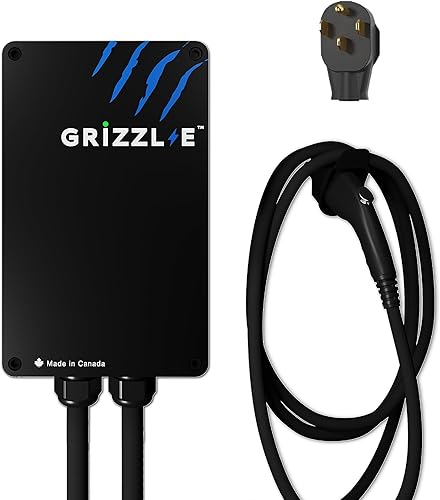
Grizzl-E Classic 40A NEMA 14-50 Charger
Level 1 vs Level 2 charger: what is the difference?
Level 1 uses 120V power, while residential Level 2 typically uses 240V. Level 2 can deliver more energy during the same parking window, provided the vehicle accepts that power.
Both supply AC electricity to the vehicle's onboard charger, which converts it for the battery. Neither provides the DC fast charging you may use on a highway trip.
| Question | Level 1 | Level 2 |
|---|---|---|
| Who does it suit? | Light-use drivers with long parking windows | Drivers needing more energy between trips |
| What connection is needed? | Suitable household outlet and circuit | Suitable higher-voltage outlet or hardwired circuit |
| Main advantage | Can avoid adding a higher-voltage connection | Replaces daily energy use more quickly |
| Main limitation | Slow recovery after heavier driving | May require electrical work |
| What limits speed? | Circuit, equipment and vehicle | Circuit, equipment and vehicle |
Battery size alone doesn't decide which level you need. A large-battery EV driven short distances can need less daily charging than a smaller vehicle covering many miles.
Level 1 vs Level 2 charging: compare energy, not labels
Kilowatts describe charging power; kilowatt-hours describe energy. Multiplying usable charging power by connected hours gives a rough energy estimate before charging losses.
For example, a hypothetical 1.4 kW connection running for 10 hours supplies about 14 kWh before losses. Compare that with your car's daily energy use rather than assuming every overnight session will refill it.
Which charging level fits your driving routine?
Choose the level that replaces your normal daily use before your next departure, with some room for longer days. Start with a representative week rather than your shortest commute.
Check your vehicle's trip display for energy consumption, or use its recent charging history. Include school runs, errands and evening trips alongside commuting.
For a rough example, 30 miles at 3 miles per kWh uses about 10 kWh of battery energy. Home charging must supply more than that because some energy is lost during charging.
When is Level 1 enough?
Level 1 fits a low-mileage EV, a lightly used second car or a plug-in hybrid that can recover its daily electric use during a long stop. Regular workplace charging can also reduce what you need at home.
The key sign is a stable routine: your battery reaches your chosen target before departure without gradually falling behind. Plugging in regularly helps spread replenishment across the week.
Skip Level 1 as your main solution if ordinary driving repeatedly leaves you short the next morning. An occasional long trip may justify a public charging stop, but frequent shortfalls call for more home charging power.
For the broader equipment picture, see our guide to home EV chargers. Our guide to whether you need Level 2 at home helps apply this choice to your routine.
When does Level 2 earn its place?
Level 2 suits long commutes, short overnight stops and households that use the same car throughout the day. It also helps when two vehicles must take turns on one charging connection.
A shorter off-peak electricity window can favor Level 2 because you can replace more energy within those hours. Check your utility plan first, since faster charging alone doesn't reduce the energy your car needs.
Cold weather can increase energy use and leave less charging power available for battery recovery. Leave extra room in your plan if your current routine only just works during mild weather.
Which of these chargers should you buy?
Choose Lectron for light-use Level 1 charging, Grizzl-E for a regular Level 2 home spot, or CHARGEHERE for different charging locations. Each solves a different problem, so match the equipment to your routine before comparing maximum output.
Lectron: for a car that stays parked
The Lectron is a portable J1772 charger with a NEMA 5-15 plug, a 16 ft cord and a fixed 15A current. It suits a nearby charging spot where the car can stay connected for extended periods.
That fixed current needs attention: 15A charging is not suitable for an ordinary 15A branch circuit's continuous-load limit. Have the supply checked against the charger's instructions rather than treating plug fit as approval.
Skip it if you need adjustable current, frequent quick turnarounds or more reach than the supplied cable allows. Lectron specifies ETL certification to UL 2594, but certification doesn't replace a suitable installation.
Grizzl-E: for a dedicated home charging spot
The Grizzl-E Classic suits drivers who want faster replenishment from an appropriate NEMA 14-50 connection. It offers 16A, 24A, 32A and 40A settings, with a 24 ft cable and metal enclosure.
Its highest setting requires a 50A circuit; the lower settings correspond to suitable lower-capacity circuits. Have the setting matched to the installation according to the instructions.
Skip it if you only have household-outlet access or your daily use is already covered comfortably by Level 1. It also won't give you a useful speed increase beyond your vehicle's AC charging limit.
Grizzl-E specifies UL certification and an IP67 enclosure. Those features suit outdoor placement, with the outlet connection and cable routing still needing proper protection.
CHARGEHERE: for access to different outlets
The CHARGEHERE suits drivers who need one portable unit for both household-outlet use and Level 2 charging. It includes the two connection options, a 25 ft J1772 cable and adjustable current from 6A to 32A.
Its maximum Level 2 output is 7.68 kW. That maximum does not apply in household-outlet mode, where the adapter, circuit and instructions set the safe limit.
The LCD shows current, voltage, charging time and energy delivered. A 1–10 hour delay timer lets you postpone a session without Wi-Fi or an app.
Skip it if you want to connect at unfamiliar locations without checking their circuits. Portable flexibility comes with the responsibility to confirm the correct mode and current each time.
How should you compare real charging speed?
Compare the lowest power limit in the whole setup, not the largest number on the charger. The circuit, equipment setting and vehicle's onboard charger all place limits on usable power.
A vehicle that accepts less AC power than the charging unit can supply won't gain speed from the extra capacity. Check the vehicle manual for its AC limit, since a DC fast-charging figure answers a different question.
Divide the energy you need to replace by the usable charging power for a rough time estimate. Allow extra time for losses, battery conditioning and changes in the power the vehicle accepts.
Avoid treating miles added per hour as a universal result. Vehicle efficiency, weather and driving conditions change how far the same amount of energy takes you.
What outlet and electrical setup do you need?
You need a circuit suitable for a continuous EV charging load, with the correct outlet or hardwired connection. A familiar-looking receptacle doesn't establish its wiring condition or available capacity.
Under the usual continuous-load sizing rule, charging current stays at or below 80% of the branch-circuit rating. That means a typical 15A circuit supports no more than 12A of continuous charging, not 15A.
Ask an electrician to confirm the circuit, breaker, wiring, outlet and required protection together. Don't solve a charging problem by replacing a breaker with a larger one.
Check what else shares a household circuit, including garage appliances and nearby outlets. Those loads can make an apparently convenient outlet unsuitable for a long charging session.
Our guide to what breaker size a Level 2 charger needs explains the sizing relationship. The guide to hardwired vs plug-in EV chargers covers the connection choices.
How much does installation affect the decision?
Installation can determine whether Level 2 is a practical upgrade. Panel capacity, wiring distance, parking location and outdoor work all affect the scope.
Get the electrical assessment before choosing the highest-output unit. A lower supported setting may already replace everything you use during the hours available.
Our EV charger installation cost guide explains the main cost factors. Read what to consider before installing an EV charger yourself before planning wiring changes.
How should you set up and care for the charger?
Place the charger so its own cable reaches the vehicle without strain, and follow its mounting and connection instructions. Check the route with the car parked in its usual position before committing to a location.
Leave enough slack to connect comfortably, but keep cables out of walking paths and away from tires. Support the control unit as directed rather than letting its weight pull on the outlet.
Inspect the plug, cable and connector for damage before use. Stop charging if you notice discoloration, a burning smell, unusual heat or repeated breaker trips, and have the cause checked.
Keep connectors clean, dry and off the ground when stored. Coil the cable loosely, avoid sharp bends and protect it from being pinched by a garage door.
Weather resistance doesn't make every connection waterproof. Protect the outlet as required, avoid standing water and never submerge the charger or connectors.
Don't add a household extension cord to make a poor location work. Our guide to extension cords and EV chargers explains the risks and better ways to reach your parking spot.
Which common mistakes should you avoid?
The biggest mistakes are choosing by maximum amperage and assuming any matching outlet is ready. Start with your energy needs, then verify the complete electrical path.
- Using a 240V current setting on 120V: A household adapter doesn't increase circuit capacity.
- Stacking charging schedules: A vehicle schedule and charger delay can overlap and leave the car waiting instead of charging.
- Relying on public-charger speed figures: Home AC charging uses a different power path from DC fast charging.
- Ignoring cable reach: Measure around the parked car, including the location of its charge port.
- Resetting a tripping breaker repeatedly: Find the electrical fault or overload before continuing.
If charging doesn't start, check that the connector is fully seated and look for an active schedule or delay. Follow the equipment's fault instructions rather than raising current to force a session.
Does connector compatibility change the choice?
Match the vehicle connector separately from the charging level. J1772 and NACS describe connector standards; Level 1 and Level 2 describe charging arrangements.
The Lectron and CHARGEHERE models use J1772. A Tesla or other NACS-equipped vehicle needs an appropriate compatible adapter, and CHARGEHERE doesn't include that vehicle-side adapter.
An outlet adapter and a vehicle connector adapter do different jobs. Neither removes the need to follow the vehicle and charger manufacturers' compatibility instructions.
Check the connector version before ordering any charger. Our J1772 vs NACS guide explains the difference.
Level 1 vs Level 2 charger: make the final choice
Choose Level 1 if it replaces your daily energy use with time to spare. Choose Level 2 if routine driving outpaces that recovery, your parking window is short or several drivers need the car between charges.
Buy the Lectron for a light-use J1772 vehicle only after confirming its fixed-current circuit needs. Pick the Grizzl-E for a regular Level 2 home connection, or CHARGEHERE when you need both modes at suitable locations.
Before ordering, write down your daily energy use, connected hours, vehicle AC limit and confirmed circuit capacity. Those four details turn the Level 1 vs Level 2 charger choice into a practical decision.
For the next step, use our home EV charger guide to plan the charger location around your garage and vehicle.
Frequently asked questions
Is Level 1 or Level 2 charging better?
Level 1 is better for light driving with long parking windows, while Level 2 is better for quicker replenishment between trips. Compare the energy you use each day with what you can replace before leaving again, then check that your home circuit supports the equipment.
How much faster is Level 2 charging?
Level 2 can supply several times the power of Level 1, but the exact difference depends on the setup. Compare usable kilowatts rather than a universal miles-per-hour claim, and account for the vehicle's AC charging limit, the selected current and the hours available to charge.
Can I use a Level 2 charger with a regular outlet?
A standard 120V household outlet cannot provide Level 2 charging. A dual-level charger can use an approved household-outlet adapter for slower Level 1 operation, but the adapter does not increase voltage or circuit capacity; Level 2 still requires a suitable higher-voltage connection and the correct current setting.
Do I need an electrician to install a Level 2 charger?
Use a licensed electrician when you need a new circuit, outlet or hardwired connection, or when the existing setup is uncertain. An outlet that fits the plug may still need attention, so have its wiring, protection, condition and circuit capacity checked before relying on it for regular charging.
Will a Level 1 charger work with every EV?
No, the connector and any adapter must be compatible with your vehicle, and the electrical supply must support the charger. The Lectron and CHARGEHERE models here use J1772; Tesla or other NACS-equipped vehicles need the appropriate compatible adapter, subject to the vehicle and charger manufacturers' instructions.